Restoration Sermons • Interactive Study Guide

Can Good People Be Saved Out of the Church

This guide presses the real question: not whether moral and sincere people exist, but where God says salvation is found. The lesson follows Cornelius and Saul until the student must answer from Scripture, not sentiment.

Text
Acts 10:1-8; 11:14
Series
Restoration Sermons
Speaker
Ed Rangel
Location / Version
Waupaca Church of Christ • NASB 1995
Auto-save ready.
Orientation

Learning Aim and Burden

Acts 10:1-8; 11:14

Thesis: Salvation is in Christ, and to be in Christ is to be in His body, the church; therefore no one, however good, is saved outside the church, because every saving blessing God gives is found only there.

This lesson is uncomfortable because decent, sincere, religious people exist everywhere. But the question is not whether they are pleasant, moral, or earnest. The question is where God has said He will save.

Real Question Location of Salvation Cornelius as Test Case Saul as Test Case

Student Name

In Your Own Words

Section I

Getting the Question Straight

Acts 11:14

Several confusions must be cleared away first. “Good people can be saved anywhere” is only true if God has said so, and we must not let assumption outrun revelation.

“It does not matter which church you join, since the church does not save” quietly trades the Lord’s one body for the religious marketplace. The issue is not whether Christ saves. He does. The issue is whether He saves anyone outside the church He purchased with His blood.

If people are saved outside the church anyway, why did Christ establish it, and why did He pay so dear a price for it?

Test Your Understanding

Defend It from Scripture

Checkpoint

Section II

What the Church Is

1 Tim. 3:15; Col. 1:18

If a person were saved out of the church, he would be saved out of everything the church is. Scripture identifies the church as the kingdom, the house and family of God, the body of Christ, and God’s building.

  • The kingdom of God, entered by the new birth.
  • The house and family of God.
  • The body of Christ, with Christ as head.
  • God’s building, composed of living stones.
To argue for salvation outside the church is to argue for salvation outside the kingdom, outside God’s family, and outside the body of Christ.

Scripture Cluster

  • John 3:5 — new birth and the kingdom.
  • 1 Timothy 3:15 — house of God.
  • Colossians 1:18, 24 — the church is Christ’s body.
  • 1 Corinthians 3:9; 1 Peter 2:5 — God’s building and spiritual house.

Teach It Back

What Must Be Rejected?

Section III

Everything That Saves Is in the Church

Eph. 1:3, 7; Acts 2:41, 47

Every spiritual blessing is in Christ. Redemption and forgiveness are in Him. The church is His body. That means the blessings God locates in Christ are not scattered across the world in parallel saving systems.

The decisive point is this: the same process that makes a person a Christian places him in the church. God joined salvation and addition to the body together. One does not come first and the other later as a merely optional step.

You cannot get the salvation without getting the body, because God joined them.

Summary of the Argument

Truth and Error

Apply This to Your Life

Section IV

The Two Test Cases: Cornelius and Saul

Acts 11:14; Acts 22:16; 1 Tim. 1:15

Cornelius

Cornelius was devout, God-fearing, generous, prayerful, and sincere. If moral goodness outside the gospel could save, it would have saved him. But the angel still said Peter would speak words by which he would be saved.

Devout God-fearing Generous Prayerful

Saul

Saul stood at the other extreme, the foremost of sinners. Yet he too was told to arise and be baptized, and wash away his sins. The best moral man and the chief sinner entered by the same door.

Chief of sinners Still had to obey Same gospel

Contrast the Two Men

Teach It in Plain Speech

Deep Study

Argument Progression, Matrices, and Synthesis

Deep Study Enabled

Argument Progression Timeline

This visual follows the sermon’s movement from the wrong question, to the nature of the church, to the location of saving blessings, to the two test cases, and finally to the invitation.

Argument progression timeline Five major sermon stages connected in sequence from question to invitation. 1 2 3 4 5 Question Clear away false framing Church Defined Kingdom, house, body, building Blessings Located In Christ, in His body Test Cases Cornelius and Saul Invitation Come into Christ on His terms
Word Greek Basic Meaning Why It Matters Here Key Texts
ChurchekklēsiaCalled-out assemblyThe church is the assembly of the saved, not a denominational label men invent.Acts 2:47; 1 Tim. 3:15; Col. 1:18
AddedprostithēmiTo add or join toThe Lord adds the saved to the church; entrance is His act, not a later optional step.Acts 2:41, 47
SavedsōzōTo save or deliverCornelius still needed salvation though he was devout and sincere.Acts 11:14; Acts 2:47
BodysōmaAn organized body under one headTo be in Christ is to be in His body. Salvation outside the church means salvation outside the body.Col. 1:18, 24; 1 Cor. 12:13
RedemptionapolytrōsisRelease by payment of a priceRedemption is not earned by decency. It is in Christ through His blood.Eph. 1:7
Wash awayapolouōTo wash off or cleanse awaySaul still needed obedient response. His sins were not spoken of as removed before baptism.Acts 22:16

Scripture Interlock Chart

Christ Every Spiritual Blessing Eph. 1:3, 7 His Body, the Church Col. 1:18, 24 Purchased by Blood Acts 20:28 Saved and Added Together Acts 2:41, 47 • 1 Cor. 12:13

Essay Section

Application

Pressure the Lesson Honestly

Cornelius and modern self-trust

If you are trusting your own decency to save you, you are standing where Cornelius stood before Peter came. Goodness is not the same as pardon.

If you have settled for “any church will do,” remember that the Lord built one church and placed salvation in Christ. He did not scatter it among the bodies men have made.

Where Are You Yielding Ground?

Repentance or Action Step

Conclusion

Invitation and Final Synthesis

Acts 2:38, 41, 47

Can good people be saved out of the church? Not because God is narrow or stingy, but because He has placed salvation in His Son, and His Son’s body is the church. Cornelius was good and still had to obey. Saul was guilty and obeyed the same gospel. The kindest thing we can do is tell the truth.

The Door Stands Open

The terms are plain. Hear the gospel. Believe that Jesus is the Christ. Repent of your sins. Confess His name. Be baptized into Christ for the remission of sins. In that moment the Lord adds the saved to His church.

  1. Hear the gospel.
  2. Believe that Jesus is the Christ.
  3. Repent of your sins.
  4. Confess His name.
  5. Be baptized into Christ for the remission of sins.

Final Synthesis

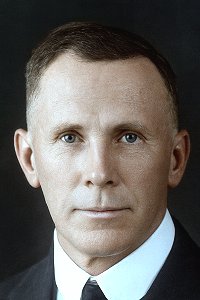
H. Leo Boles
Source Heritage

About H. Leo Boles

H. Leo Boles (1874–1946) was a preacher, teacher, writer, debater, and defender of New Testament Christianity among churches of Christ. He served on the faculty of Nashville Bible School, later David Lipscomb College, and also served as president in two different periods of leadership. His influence reached the classroom, the pulpit, religious journalism, Bible class literature, and major doctrinal controversies of his day.

Read full biography

Henry Leo Boles was born near Gainesboro, in Jackson County, Tennessee, on February 22, 1874, and died in Nashville on February 7, 1946. He was raised in a preacher’s home and was connected through his family line to “Raccoon” John Smith. His father was also a gospel preacher, and Boles grew up in an environment shaped by Scripture, preaching, and church life.

His early education came through rural Tennessee schools with short terms, while much of his youth was spent working on the farm. He attended schools in Cannon and Warren Counties, studied at Burritt College, graduated in 1900, later entered Nashville Bible School in 1903, and graduated in 1906. He also earned the M.A. degree from Vanderbilt University in 1920.

Boles married Cynthia Cantrell in 1894. Their son, Cleo, was born in 1895, but Cynthia died four days later. He later married Ida Mae Meiser in 1906, and their son, Leo Lipscomb Boles, was born in 1907. Boles was baptized into Christ on September 27, 1895, and preached his first sermon on June 7, 1903, on “The Human Side of Salvation.”

Though widely known as a preacher, Boles was especially influential as a teacher. He joined the faculty of Nashville Bible School in 1906 and studied daily under David Lipscomb. He taught philosophy, mathematics, logic, ethics, evidences of Christianity, and above all the Bible itself. He trained students to reason from Scripture and resist denominationalism, speculation, and modernism.

He served as president of David Lipscomb College from 1913 to 1920 and again from 1923 to 1932. Over the years, roughly 1,500 young preachers passed through his classes, along with many other students who carried his influence into congregations, homes, and Bible classes.

Boles also became one of the most productive writers among churches of Christ in the first half of the twentieth century. For nearly forty years he wrote for the Gospel Advocate as contributor, editor, and staff writer. He authored commentaries on Matthew, Luke, and Acts, wrote on the Holy Spirit, and produced biographical sketches of gospel preachers to preserve the memory and influence of earlier workers.

He took part in significant doctrinal conflicts of his era, including the Boles-Boll debate on premillennialism and the Boles-Clubb discussion on instrumental music in worship. He opposed denominationalism, modernism, unauthorized innovations, and the softening of biblical authority. He also helped lead the move away from outside lesson-material control when he believed modernist influence was entering Bible class literature.

Boles’ final months were marked by illness, but he continued dictating letters and writing near the end. He died on February 7, 1946, and was buried in Woodlawn Memorial Park in Nashville. The simple inscription at his grave reads, “At Home.” Across his life as preacher, teacher, editor, president, and writer, the unifying thread was his commitment to the authority of the word of God.
Submit to Preacher Ed

This opens your email app with a draft addressed to the preacher. Empty sections are skipped where practical.

Theme: Warm Restoration • Deep Study: Yes
Designed as a WordPress-safe HTML fragment with local save, export, print, checkpoints, essay work, conceptual visuals, and doctrinal testing.
Email target: admin@evvfaith.com