The Burnt Offering — A Life Placed Fully on the Altar
Text: Leviticus 1 New Testament Tie-In: Hebrews 10:1–10
The book opens with God calling Moses from the tent of meeting, and the reason is not small: the God who dwelt among His people did not leave sinful men to guess how they could draw near. Israel did not invent sacrifice. Israel did not design worship. Israel did not decide what God would accept. The Lord spoke, and His word governed the altar.
Leviticus begins, “Then the LORD called to Moses and spoke to him from the tent of meeting” (Leviticus 1:1). The Hebrew title, *Vayiqra*, means “And He called.” That is a fitting doorway into the book. Leviticus is not first about man reaching upward. It is about God calling sinners near on His terms. Nearness to God is mercy, but it is never casual.
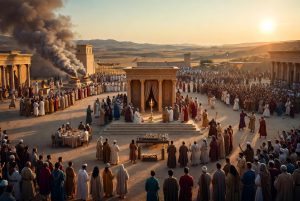
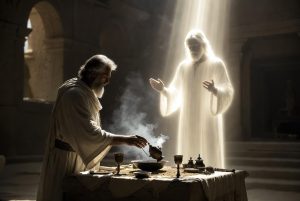
The burnt offering was brought from the herd, the flock, or the birds, depending on the worshiper’s ability. A rich man could bring a bull. Another man might bring a sheep or goat. A poor man could bring turtledoves or pigeons. The offering differed in value, but the demand did not change: it had to be acceptable before the Lord. The animal was brought to the entrance of the tent of meeting. The worshiper laid his hand on its head. Blood was shed. The priest applied the blood to the altar. Then the offering was burned completely.
Nothing was held back.
The first heavy lesson of Leviticus 1 is not difficult to find. The burnt offering was not a small religious token. It was not a leftover gesture. It was not a quick nod toward God before returning to ordinary life. The whole animal went up in smoke before the Lord. The worshiper watched life given, blood poured, and the offering consumed. Sinful man could not approach the Holy One lightly.
The laying on of hands was not empty ceremony. The worshiper identified with the sacrifice. The life of the animal stood in the place of the worshiper. Leviticus says the offering would “be accepted for him to make atonement on his behalf” (Leviticus 1:4). The blood on the altar preached a hard truth: sin costs life. Fellowship with God requires atonement. No man walks into the presence of God on the strength of sincerity, emotion, family history, or good intentions.
The altar stood between the sinner and the sanctuary.
Modern religion hates that kind of sentence. It wants access without blood, forgiveness without surrender, worship without reverence, and nearness without holiness. Leviticus will not allow it. God is gracious, but His grace does not erase His holiness. The Lord made a way for Israel to come near, but the way was marked by blood and fire.
Christians are not under the Law of Moses. We do not bring bulls, sheep, goats, or birds to an altar. Christ has fulfilled what those sacrifices could only foreshadow. Hebrews says the Law had “only a shadow of the good things to come and not the very form of things” (Hebrews 10:1). The old sacrifices were repeated because they could not finally remove sin. They taught, pointed, and prepared, but they could not perfect the conscience.
Then Christ came.
Hebrews 10 brings the shadow into the light. God did not ultimately desire animal blood as the final answer to human guilt. The sacrifices pointed forward to the obedient body of Christ. “Behold, I have come to do Your will” (Hebrews 10:9). Jesus did what no worshiper and no animal could do. He offered Himself in full obedience to the Father. His body was not dragged unwillingly to the cross. He gave Himself. He held nothing back.
The burnt offering was wholly consumed on the altar. Christ gave Himself wholly at Calvary. But there is a difference that must not be blurred. The animal sacrifices were shadows. Christ is the substance. The blood of bulls and goats could not take away sins, but the offering of Jesus Christ sanctifies His people “once for all” (Hebrews 10:10).
Leviticus 1 must not be treated like dead religious furniture. It teaches us how serious sin is, how holy God is, how costly atonement must be, and how complete Christ’s obedience was. The cross did not appear out of nowhere. God had been teaching Israel for centuries that access requires sacrifice, guilt requires blood, and worship belongs to Him.
The Christian response is not to rebuild the altar. Christ has already offered Himself. The response is to belong to God without pretending we can keep part of ourselves off the altar.
Paul uses that kind of language in Romans 12:1 when he tells Christians to present their bodies as “a living and holy sacrifice, acceptable to God.” He is not sending us back to Leviticus as covenant law. He is pressing the fulfilled meaning of sacrifice into Christian life. Since Christ gave Himself for us, we do not give God a corner of the heart, a Sunday habit, a polite prayer, or a cleaned-up public image. We give Him the life.
A half-surrendered Christianity is a contradiction. Christ does not purchase the whole man so the man can negotiate which rooms of the heart remain private. He does not cleanse the conscience so the Christian can keep pet sins in the dark. He does not open access to God so worship can become casual, careless, or self-designed.
The burnt offering still presses us because it exposes the lie of partial devotion. It asks whether God receives the first and best, or whether He gets what is left after comfort, ambition, appetite, pride, and convenience have taken their share. It asks whether worship is governed by God’s word or reshaped by human preference. It asks whether we understand that Christ did not die to make sin manageable. He died to make sinners holy.
Leviticus opens with God calling. The gospel announces that God still calls through Christ. The call is not to vague spirituality. It is not to religious admiration from a distance. It is a call to come near through the blood of the Son, and then to live as one who belongs wholly to Him.
The worshiper did not control the outcome by bringing the animal. God had to accept the offering. Leviticus 1:4 says the sacrifice would be accepted “to make atonement on his behalf.” That keeps grace and reverence together. The worshiper came because God allowed him to come, but he came by the way God commanded. The altar was mercy, not human leverage.
The chapter also presses the seriousness of identification. The hand placed on the animal’s head was not a sentimental gesture. The worshiper was acknowledging that life must answer for sin. He was not watching a distant religious performance. He was involved. The death at the altar stood in relation to him. The blood was not abstract theology; it was the cost of approach.
This makes the cross sharper, not softer. Christ did not die to decorate religion with a moving story. He gave Himself because sin is real, guilt is real, and no sinner can enter God’s presence by sincerity alone. Hebrews 10 does not make the old sacrifices embarrassing. It shows why they were never enough. They had to be repeated because they pointed beyond themselves. Christ offered Himself once for all because His obedience, His blood, and His priestly work are sufficient.
Leviticus 1 also corrects shallow ideas of dedication. Full surrender is not a religious mood. It is not admiration for God from a safe distance. The whole burnt offering went up before the Lord, and nothing was reserved for private use. Under Christ, the application is not that Christians must reproduce the ritual. The application is that redeemed people cannot treat God as though He receives leftovers of loyalty while self keeps the throne.
At this point Romans 12:1 belongs. Paul does not drag Christians backward into the Law of Moses. He presses fulfilled sacrifice into embodied obedience. The body matters. The habits matter. The appetites matter. The calendar, speech, worship, money, relationships, and private life all come under the claim of God. A “living and holy sacrifice” is not a slogan. It is the life of a person who understands mercy and answers with surrender.
Questions for Reflection
- What part of your life are you most tempted to keep back from God while still claiming devotion to Him?
- How does Leviticus 1 deepen your understanding of the costliness of Christ’s sacrifice?
- Where has worship become too casual, too preference-driven, or too disconnected from God’s revealed will?
- What does the laying on of hands teach about personal guilt, substitution, and the cost of drawing near to God?
- How should Romans 12:1 change the way you think about your body, habits, worship, and daily obedience?
Prayer
Father, teach us to tremble where Your word teaches us to tremble, and to rejoice where Your mercy has opened the way. Thank You for the sacrifice of Jesus Christ, who gave Himself fully and perfectly for sinners. Keep us from casual worship, partial surrender, and cheap thoughts of grace. Help us present our lives to You with reverence, obedience, and gratitude. Through Christ, our perfect sacrifice and mediator, amen.
Takeaway
God does not call sinners near so they can remain unchanged. The burnt offering pointed to full surrender, and Christ fulfilled it with perfect obedience. The only fitting response is a life placed wholly before God.
---
Preach It
A Life Placed Fully on the Altar
Text: Leviticus 1 New Testament Tie-In: Hebrews 10:1–10; Romans 12:1
Thesis
The burnt offering teaches that sinful man cannot approach a holy God casually, and Christ fulfills that offering by giving Himself fully for us, calling us to give ourselves fully to Him.
Simple Sermon Outline
1. God Calls Sinners Near on His Terms
Leviticus 1 opens with the Lord speaking from the tent of meeting. The altar was not man’s idea. Sacrifice was not religious creativity. God told Israel how to come near. Sinful people do not decide what holy God must accept.
2. The Burnt Offering Required Full Surrender
The animal was brought, identified with, killed, and burned completely. The worshiper saw blood, death, fire, and acceptance before God. The message was plain: sin costs life, and nearness requires atonement.
3. Christ Fulfilled What the Offering Could Only Shadow
Hebrews 10 says the sacrifices of the Law were a shadow, not the final answer. Bulls and goats could not take away sin. Christ came to do the Father’s will. He offered His body once for all. He did not merely bring a better sacrifice. He became the sacrifice.
4. The Christian Life Must Not Be Half-Surrendered
Romans 12:1 calls Christians to present their bodies as a living and holy sacrifice. We do not rebuild Leviticus’ altar, but we do learn its demand: God does not receive leftover devotion. Christ gave Himself fully. The Christian cannot answer with partial obedience.
Conclusion and Invitation
The burnt offering pointed forward to Christ. The cross shows the full cost of sin and the full mercy of God. God calls sinners near through the blood of His Son, but He does not call them near so they can keep living like they belong to themselves.
Christ has offered Himself once for all.
Come to Him in obedient faith. Hear the gospel. Believe in Christ. Repent of sin. Confess Him as Lord. Be baptized for the forgiveness of sins. Then rise to live as one who belongs wholly to God.