The Peace Offering — Fellowship at God’s Table
Text: Leviticus 3 Series: Vayiqra — Called Near, Made Holy Theme: Fellowship, thanksgiving, and peace before God Christ Connection: Christ brings His people near to God through His blood and makes true fellowship possible.
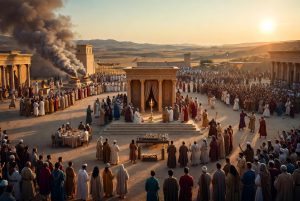
The peace offering stands in Leviticus 3 as a different kind of sacrifice. The burnt offering went wholly to God. The grain offering brought the fruit of labor before Him. The peace offering brings the language of fellowship into view. Blood is still shed. The altar is still holy. God still governs the offering. Yet this sacrifice also includes a shared meal, and that meal teaches Israel that fellowship with God is never casual, never self-invented, and never separated from atonement.
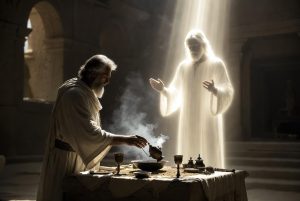
The word often translated “peace offering” is tied to the idea of well-being, wholeness, fellowship, and covenant peace. It is not merely the absence of conflict. It is life brought into ordered relationship before God. A worshiper came with an animal from the herd or the flock. The animal had to be without defect. The worshiper laid his hand on its head. The animal was killed at the doorway of the tent of meeting. The priests sprinkled the blood around the altar. The fat portions were offered to the Lord by fire.
Then the meal followed.
That order must not be missed. The meal did not come first. Fellowship did not begin with appetite, emotion, or human warmth. Blood came before the meal. The altar stood before the table. Peace with God was not treated as a light thing. Israel had to learn that fellowship with the Holy One requires sacrifice, reverence, and submission to His revealed will.
The Text in Its Setting
Leviticus 3 continues the opening section of offerings in Leviticus 1–7. These chapters introduce Israel to the sacrifices that shaped worship at the tabernacle. God was not merely giving religious ceremonies. He was teaching His people how sinful men could live near a holy God.
The peace offering could come from the herd, the flock, or the goats. The chapter gives careful instructions for each. In every case, the worshiper brought the animal before the Lord, identified with it by laying his hand on its head, and killed it at the entrance of the tent of meeting. The priests handled the blood. The fat was placed on the altar as food for an offering by fire to the Lord.
Leviticus 3 ends with a lasting statute: Israel was not to eat fat or blood. The blood belonged to God because life belongs to God. Later, Leviticus 17:11 explains this more fully: “For the life of the flesh is in the blood.” The fat portions, often associated with the best and richest parts, were also reserved for the Lord. Fellowship did not mean man could take whatever he wanted. Even at the table of peace, God drew boundaries.
That is one of the steady lessons of Leviticus. Nearness to God is mercy, but nearness never removes reverence.
What God Was Teaching Israel
The peace offering taught Israel that fellowship with God was possible, but only through the way God provided. The worshiper did not stroll into communion with God by personal confidence. He brought an acceptable sacrifice. He placed his hand on the animal. Blood was shed. The priest applied the blood to the altar. The Lord received His portion. Only then did the meal of fellowship have its place.
This was not ordinary eating. It was covenant fellowship. The worshiper was not merely consuming food; he was participating in a holy meal connected to sacrifice. The table was not detached from the altar. Thanksgiving, vow fulfillment, and freewill devotion all belonged in the larger category of peace offerings, as Leviticus 7 later explains. These offerings gave Israel a way to express gratitude, devotion, and fellowship before the Lord.
But God did not let fellowship become sentimental. The peace offering had rules. The animal had to be acceptable. The blood had to be handled rightly. The fat belonged to the Lord. The people were forbidden to eat blood. The meal was holy because God was holy.
Modern religion often wants fellowship without holiness. It wants the warmth of togetherness without the weight of sacrifice. It wants community without cleansing, worship without submission, and peace without blood. Leviticus 3 does not allow that kind of religion. The peace offering teaches that fellowship with God is a gift, but it is a gift governed by God.
What This Reveals About God
Leviticus 3 reveals a God who does more than forgive guilt from a distance. He brings His people into fellowship. He allows them to eat in connection with sacrifice. He teaches them that peace with Him is not imaginary. It is not merely internal feeling. It is covenant nearness granted through His appointed way.
God is holy enough to require blood and gracious enough to provide fellowship. Both truths must stand together. If we only see holiness, we may imagine God as distant and unwilling. If we only see fellowship, we may make Him casual and common. Leviticus corrects both errors.
The Lord who receives the fat on the altar also allows His people to share in the meal. He is not a pagan deity being bribed by sacrifice. He is the covenant God who calls sinners near, teaches them reverence, receives what He commands, and grants them peace at His table.
This must be faced for how we think about worship. God is not honored by cold formality that has no gratitude, and He is not honored by warm emotion that ignores His authority. The peace offering held reverence and joy together. It taught Israel that fellowship with God is both serious and blessed.
What This Reveals About Sin and Worship
The peace offering exposes a common lie: that fellowship with God can be assumed. People speak easily about being close to God while ignoring what God says about sin, sacrifice, obedience, and worship. Leviticus does not permit easy assumptions. Peace had to come through the altar.
The worshiper’s hand on the animal’s head was a sober act. The animal did not die as a decorative ritual. Its life was given in connection with the worshiper’s approach to God. Blood touched the altar before the worshiper enjoyed the meal. That order preached. Sin disrupts fellowship. Blood is required. God provides the way, but man does not get to rewrite it.
Worship in Leviticus is never self-designed. The peace offering had meaning because God gave it meaning. The worshiper could not decide that a different animal, a different procedure, or a different handling of blood would do just as well. Sincerity did not authorize alteration. Gratitude did not cancel command.
That principle still rebukes careless worship. The question is not whether people feel sincere, moved, or spiritually connected. The question is whether God has spoken. Leviticus 3 shows fellowship at God’s table, but it also shows that fellowship must bow before God’s word.
How Christ Brings This Into Full View
Christ fulfills what the peace offering could only anticipate. The blood of animals could not bring final, complete, once-for-all peace with God. The sacrifices of the Law taught Israel and pointed forward, but they were shadows. Christ is the substance.
Romans 5:1 says, “Therefore, having been justified by faith, we have peace with God through our Lord Jesus Christ.” That peace is not a vague religious mood. It is peace grounded in the saving work of Christ. Romans 5:9–10 ties that peace directly to His blood and His death. We are justified by His blood and reconciled to God through the death of His Son.
Ephesians 2 presses the same truth. Christ “is our peace” (Ephesians 2:14). He brings near those who were far off “by the blood of Christ” (Ephesians 2:13). Peace with God is not created by human agreement, emotional experience, or religious tradition. It is made by Christ through the cross.
Hebrews also teaches that Christ opens access to God in a way the old sacrifices never could. Through His blood, believers have confidence to enter the holy place (Hebrews 10:19–22). The peace offering allowed Israel to taste covenant fellowship in shadow form. Christ brings the real access, the real cleansing, and the real reconciliation.
This is why Christian fellowship must never be reduced to social warmth. Biblical fellowship begins with God, blood, reconciliation, and truth. The church does not create fellowship by sharing a room, a meal, a preference, or a mood. Fellowship exists because Christ has brought sinners near to God and joined them together in Him.
Why This Still Matters
Christians are not under the Law of Moses. We do not bring peace offerings to a Levitical priest, and we do not eat sacrificial meals at the tabernacle. Christ has fulfilled the sacrificial system. The altar of Leviticus is not our way of approach.
But Leviticus 3 still speaks because the truths underneath the peace offering have not died. Sin still breaks fellowship. God still defines the way of peace. Blood still stands at the center of reconciliation. Worship still belongs to God. Fellowship still requires holiness.
A casual view of fellowship is dangerous. Some treat fellowship as friendship with religious language attached. Others treat it as shared activity, shared meals, shared history, or shared opinions. Those things may have a place, but they are not the foundation. Fellowship with God and with His people rests on Christ and His truth.
The peace offering also challenges private, isolated religion. Israel’s offering was not merely inward feeling. It involved approach, sacrifice, priestly work, altar, and meal. Worship was embodied. Gratitude took form. Fellowship was expressed. Christianity likewise refuses to leave faith as a private thought. Christians praise, gather, remember the Lord, give thanks, serve, share, and walk together because Christ has reconciled them to God.
The Lord’s Supper should be considered carefully here. It is not the peace offering continued under a new name, and Christians should not blur the covenants. Yet the Supper does proclaim the Lord’s death, and it is a divinely given act of remembrance and participation. The table of the Lord must never be treated as common, casual, or self-defined. Peace with God came at the cost of blood.
Leviticus 3 presses the heart to ask whether our idea of fellowship is too thin. Do we want peace without repentance? Community without holiness? Worship without authority? A table without the cross? God has not called His people into casual nearness. He has called them into peace through Christ, and that peace must produce reverence, gratitude, obedience, and holy fellowship.
The peace offering teaches that fellowship with God is not man inviting God to his table. It is God calling sinners near by sacrifice, granting peace on His terms, and teaching His people to rejoice without forgetting the blood.
Questions for Reflection
- Where have you been tempted to assume peace with God without seriously considering sin, sacrifice, and obedience?
- How does the peace offering correct shallow ideas of fellowship?
- Why must the order of blood before meal shape the way Christians think about peace with God?
- How does Christ fulfill the peace offering without putting Christians back under the Law of Moses?
- Where does your fellowship with God need deeper reverence, gratitude, or obedience?
Prayer
Holy Father, thank You for making peace possible through the blood of Christ. Forgive us for treating fellowship lightly, for assuming nearness without reverence, and for forgetting the cost of reconciliation. Teach us to rejoice in Your mercy without becoming casual with Your holiness. Help us walk in peace, gratitude, obedience, and truth with You and with Your people. Through Jesus Christ, our peace and our mediator, amen.
Takeaway
God grants fellowship on His terms, and the peace Christ gives through His blood must never be reduced to casual religion.
---
Preach It
Fellowship at God’s Table
Text: Leviticus 3 New Testament Tie-In: Romans 5:1–2; Ephesians 2:13–18
Thesis
The peace offering teaches that fellowship with God is not casual access, but blood-secured communion granted on God’s terms and fulfilled in Christ.
Simple Sermon Outline
1. Fellowship With God Had to Come Through Sacrifice
Leviticus 3 shows the worshiper bringing an acceptable animal before the Lord. Blood was shed and placed on the altar before the meal of fellowship could be enjoyed. Peace with God did not begin with human emotion. It began with God’s appointed sacrifice.
2. The Best Belonged to the Lord
The fat portions were offered to God. Israel did not treat fellowship as a light meal with religious language attached. The Lord received what He commanded, and the worshiper learned that peace with God must never become careless familiarity.
3. Christ Secures the Peace the Offering Could Only Foreshadow
Romans 5 says Christians have peace with God through Jesus Christ. Ephesians 2 says those once far off are brought near by His blood. The peace offering pointed forward, but Christ brought the reality. Fellowship is not earned by a ritual meal. It is secured through the blood of the Son.
4. Peace With God Must Produce Reverent Fellowship
A man cannot claim peace with God while treating God’s holiness lightly. Christ opens access, but He does not make worship casual or obedience optional. The peace Christ gives must shape the table, the home, the congregation, and the life.
Conclusion and Invitation
The peace offering taught Israel that fellowship with God was a gift guarded by sacrifice. Christ fulfills that shadow by bringing sinners near through His own blood.
Come to God through Christ. Hear the gospel. Believe in Him. Repent of sin. Confess Him as Lord. Be baptized for the forgiveness of sins. Then walk as one who has been brought near by blood-secured peace.