Consecrated for Service — Priests Set Apart
Text: Leviticus 8 Series: Vayiqra — Called Near, Made Holy Theme: God sets apart priests for holy service, showing that access to Him requires mediation, cleansing, sacrifice, and obedience. Christ Connection: Christ fulfills and surpasses the Levitical priesthood as the sinless high priest who offers Himself and brings His people near to God.
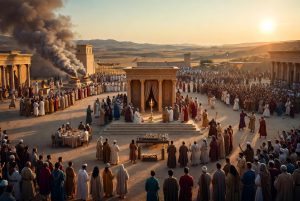
Leviticus 8 does not begin with private ambition. Aaron does not step forward and claim priesthood for himself. His sons do not volunteer for sacred office because they feel drawn to religious work. Moses gathers the congregation at the doorway of the tent of meeting because the Lord commanded it. Priesthood in Israel was not self-appointed. Holy service began with God’s call, God’s command, and God’s public setting apart.
That alone corrects a great deal of religious confusion. Nearness to God was not managed by human enthusiasm. Israel could not invent its own mediators, select its own rituals, or treat sacred service as a matter of personality and preference. God had already given the tabernacle pattern. He had already described the offerings. Now He consecrates the men who will serve at the altar.
Leviticus 8 is about ordination, but it is not a ceremony built on human honor. It is heavy with washing, clothing, anointing, blood, sacrifice, and public obedience. Aaron and his sons are being set apart for priestly work, but the chapter makes one thing impossible to miss: the men who serve near holy things must first be dealt with by God.
Moses brings Aaron and his sons forward and washes them with water. Before they are clothed for service, they are washed. Before hands are filled with priestly duties, bodies are cleansed. The washing did not mean Aaron was sinless. It showed that a man does not step into holy service as he is, on his own terms, with ordinary uncleanness treated as harmless. God required cleansing before priestly nearness.
Then Moses clothes Aaron with the priestly garments: the tunic, sash, robe, ephod, breastpiece, turban, and holy crown. These garments were not costumes for religious pageantry. They marked Aaron as one set apart for service before God and on behalf of the people. The high priest did not represent himself. He stood in an appointed role. He carried a burden greater than personal devotion. He served in the presence of God for Israel.
The clothing of Aaron teaches that holy work is never merely inward feeling. God gave visible forms to priestly service because priesthood belonged to His order, not man’s imagination. The garments, the anointing oil, the sacrifices, and the blood all announced the same truth: access to God must be mediated in the way God provides.
Moses then anoints the tabernacle and everything in it. The dwelling place, altar, utensils, basin, and base are set apart. The place of worship had to be holy because the God who dwelt among Israel is holy. The altar was not common furniture. The utensils were not ordinary tools. The basin was not just a container. God was training Israel to distinguish between holy and common, clean and unclean, authorized and unauthorized.
Modern religion often wants a God without distinctions. It wants worship spaces, worship acts, worship language, and worship leadership treated as flexible material for human creativity. Leviticus 8 stands against that instinct. God makes distinctions because God is holy. What He sets apart must not be dragged back into common use.
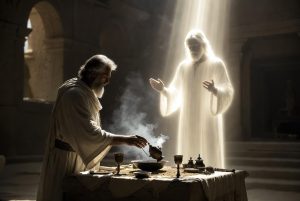
Aaron is anointed with oil. The oil marks him for priestly service, but it does not remove the need for sacrifice. Immediately after the washing, clothing, and anointing, the bull of the sin offering is brought. Aaron and his sons lay their hands on its head. Moses slaughters it. Blood is placed on the horns of the altar to purify the altar, and the rest is poured out at the base. The fat is burned, while the bull’s hide, flesh, and refuse are burned outside the camp.
Priests need sacrifice too.
That is one of the sobering truths in this chapter. Aaron is being consecrated, but he is still a sinner. His sons are being set apart, but they are not clean by nature. The priests who will handle offerings for the people must first stand before the altar with blood shed for them. Leviticus will not allow the priesthood to become a class of untouchable religious men. Their office is holy, but their humanity is still stained by sin.
The burnt offering follows. Aaron and his sons lay their hands on the ram. It is slaughtered. Its blood is sprinkled around the altar. The whole ram is burned as a soothing aroma to the Lord. The priestly consecration includes not only sin dealt with, but life offered up. The men who serve at the altar must belong wholly to the God of the altar.
Then comes the ram of ordination. Moses places blood on Aaron’s right ear, right thumb, and right big toe, and then on the same parts of his sons. The symbolism is not hard to follow, though it must not be turned into fanciful allegory. The priest must be consecrated in hearing, service, and walk. The ear must listen to God. The hand must handle holy things rightly. The foot must walk in the path of priestly obedience.
A priest who will not hear God cannot serve God. A priest with careless hands profanes what is holy. A priest whose walk contradicts his office becomes a danger to the people. Blood marks the ear, hand, and foot because priestly service is not partial. God claims the whole man for holy duty.
Moses also takes portions of the offering, along with unleavened bread, a cake mixed with oil, and a wafer, and places them in the hands of Aaron and his sons as a wave offering before the Lord. Their hands are filled for service. Priesthood is not merely status. It is work before God. They are not consecrated to stand around with titles. They are set apart to serve according to command.
The ordination then continues for seven days. Aaron and his sons must remain at the doorway of the tent of meeting day and night, keeping the charge of the Lord so they will not die. That sentence cuts through all shallow views of ministry. Holy service was not light. Disobedience near the sanctuary was deadly serious. The priests were not being trained to be impressive. They were being taught to obey.
Leviticus 8 therefore gives Israel a theology of mediation. Sinners need priests. Priests need cleansing. Priests need sacrifice. Priests must be set apart by God. Priests must obey God’s word. The altar, the garments, the oil, the blood, and the seven days all press the same burden: no one approaches the Holy One casually.
Christians are not under the Levitical priesthood. We do not seek Aaronic priests. We do not return to tabernacle ordination rites. The priesthood of Aaron belonged to the Law of Moses, and that covenant has been fulfilled in Christ. Hebrews is plain that the priesthood changed, and with it there is a change of law also. Christ did not come as another priest in Aaron’s line. He is the better high priest after the order of Melchizedek, holy, innocent, undefiled, separated from sinners, and exalted above the heavens.
The contrast is necessary. Aaron had to offer sacrifice for his own sins. Christ had no sin. Aaron’s priesthood passed from man to man because death kept removing the priests. Christ holds His priesthood permanently. Aaron entered a man-made sanctuary. Christ entered heaven itself. Aaron offered animal blood. Christ offered His own blood. Aaron’s work had to be repeated. Christ offered Himself once for all.
Leviticus 8 prepares the reader to feel the greatness of Hebrews. Without Leviticus, people often flatten Christ’s priesthood into a vague religious title. Hebrews will not let us do that. Jesus is not merely a comforting figure who understands pain. He is the appointed mediator who brings sinners into the presence of God by His own blood. He does what no son of Aaron could do.
That also means Christians must not treat access to God as casual. The fact that Christ has opened the way does not make the way cheap. Hebrews 10 says believers have confidence to enter the holy place by the blood of Jesus. Confidence comes through blood, not through self-esteem, sincerity, or religious habit. The same passage calls us to draw near with a sincere heart, full assurance of faith, hearts sprinkled clean from an evil conscience, and bodies washed with pure water.
The language of cleansing, blood, and access does not disappear. It is fulfilled and intensified in Christ.
Leviticus 8 also presses those who teach, lead, preach, serve, and shepherd among God’s people. No Christian today is a Levitical priest, but no servant of God has permission to handle holy things carelessly. The man who teaches Scripture must have an ear marked by submission to the word. The hands that serve must not use holy work for pride, control, or applause. The feet that walk before the congregation must not wander into hypocrisy while the mouth speaks of holiness.
This chapter exposes the foolishness of separating public service from private consecration. A man may know religious language, wear a title, stand before people, and still lack reverence. Leviticus 8 will not let service become performance. God sets apart servants for obedience. The charge of the Lord must be kept.
The same pressure reaches every Christian. In Christ, God’s people are described as a holy priesthood, offering spiritual sacrifices acceptable to God through Jesus Christ. That does not make every Christian a Levitical priest. It means those redeemed by Christ belong to God for worship, service, and holiness. We are not cleansed so we can return to common living. We are not brought near so we can live as though we still belong to ourselves.
The question Leviticus 8 leaves with us is not whether we admire consecration. The question is whether we understand that God still claims those He brings near. The ear, the hand, and the foot belong to Him. Hearing, serving, and walking must come under the blood-bought claim of Christ.
Aaron’s consecration was surrounded by blood because sinners cannot serve near holy things without atonement. Christ’s priesthood stands above Aaron’s because He needed no cleansing and offered the sacrifice that truly cleanses. Through Him, Christians have access, mercy, and confidence. But confidence must never become carelessness. The way is open because the Son of God gave Himself, not because holiness became less serious.
Questions for Reflection
- What does Leviticus 8 teach about the seriousness of serving near holy things?
- Why is it important that Aaron and his sons were washed, clothed, anointed, and marked by blood before priestly service?
- How does this chapter prepare us to understand Christ as the better high priest in Hebrews?
- Where are Christians tempted to confuse access to God with casualness before God?
- How should the ear, hand, and foot marked by blood shape the way we think about hearing, serving, and walking before the Lord?
Prayer
Holy Father, teach us to honor the access You have given through Christ. Forgive us for treating holy service lightly, for listening carelessly, serving selfishly, and walking inconsistently before You. Thank You for Jesus Christ, our perfect high priest, who needed no sacrifice for Himself and offered Himself for us. Cleanse our hearts, steady our hands, open our ears to Your word, and teach us to walk as people who belong to You. Through Christ, our mediator and sacrifice, amen.
Takeaway
God sets apart those who serve Him, and Christ our perfect high priest brings us near without making holiness casual.
---
Preach It
Consecrated for Service — Priests Set Apart
Text: Leviticus 8 New Testament Tie-In: Hebrews 7:23–28; Hebrews 10:19–22; 1 Peter 2:5
Thesis
Leviticus 8 teaches that holy service requires cleansing, sacrifice, and obedience, and Christ fulfills the priesthood as the perfect high priest who brings His people near to God.
Simple Sermon Outline
1. God Appointed the Priests
Aaron and his sons did not seize the priesthood. God commanded Moses to bring them forward and consecrate them publicly. Holy service begins with God’s authority, not human ambition.
2. God Cleansed and Clothed the Priests
Before Aaron served, he was washed, clothed, and anointed. The priest did not come as he was. God marked him for holy service and taught Israel that nearness requires cleansing and consecration.
3. God Marked the Priests with Blood
Blood was placed on the ear, thumb, and toe. The priest’s hearing, service, and walk belonged to God. The priest who handles holy things must listen, serve, and walk under God’s command.
4. Christ Is the Better High Priest
Aaron needed sacrifice for himself. Christ did not. Aaron’s priesthood ended in death. Christ holds His priesthood permanently. Aaron offered animal blood. Christ offered Himself once for all.
Conclusion and Invitation
Leviticus 8 shows that no sinner serves near God casually. Priesthood required washing, sacrifice, blood, and obedience.
Christ has done what Aaron could never do. He brings sinners near by His own blood. Hear the gospel. Believe in Christ. Repent of sin. Confess Him as Lord. Be baptized for the forgiveness of sins. Then live as one set apart for God’s service.