When God Draws Near in Glory
Text: Leviticus 9 Series: Vayiqra — Called Near, Made Holy Theme: God draws near to His people through sacrifice, priestly mediation, and obedient worship. Christ Connection: Christ fulfills the priesthood and sacrifice that bring sinners near, and through Him God’s people receive access with reverence instead of terror.
Leviticus 9 stands at the edge of a holy moment. The priests have been consecrated. The offerings have been explained. The tabernacle has been prepared. Aaron and his sons have remained at the doorway of the tent of meeting for seven days, keeping the charge of the Lord. Now the eighth day arrives, and Israel is about to see what all the blood, washing, clothing, anointing, sacrifice, and obedience were preparing them to receive.
The glory of the Lord would appear to the people.
That is not decorative language. Israel had come out of Egypt, stood at Sinai, seen the tabernacle built, and watched the priesthood set apart. Now God would show that He accepted the priestly service He had commanded. The point was not religious spectacle. God was not entertaining Israel with fire from heaven. He was confirming that sinful people could stand near His dwelling only through the way He provided.
Moses calls Aaron, Aaron’s sons, and the elders of Israel. Aaron is told to take a calf for a sin offering and a ram for a burnt offering. The people are told to bring a male goat for a sin offering, a calf and lamb for burnt offerings, an ox and ram for peace offerings, and a grain offering mixed with oil. The reason is stated plainly: “for today the LORD will appear to you” (Leviticus 9:4).
God’s appearing did not remove the need for sacrifice. His nearness made sacrifice necessary.
That is where many people misunderstand God’s presence. They speak as though the nearness of God automatically means comfort without fear, acceptance without atonement, and joy without cleansing. Leviticus 9 does not allow that kind of careless thinking. God is drawing near, and the first thing placed before Israel is not music, mood, excitement, or religious enthusiasm. It is sacrifice. Sin must be addressed. Life must be offered. Blood must be handled according to the word of the Lord.
Aaron begins with his own sin offering. He is the high priest, but he is not sinless. He has been washed, clothed, anointed, and consecrated, but he still needs blood. Before he can serve on behalf of the people, he must offer for himself. The calf is brought, slaughtered, and its blood is applied. The fat is burned on the altar, while the flesh and hide are burned outside the camp.
This is one of the humbling features of the Levitical priesthood. The priest stood between God and the people, but he was not above the need for mercy. He could not mediate because he was naturally pure. He could only serve because God appointed him and provided blood. Aaron’s office was holy, but Aaron himself was still a man who needed atonement.
The burnt offering follows. Aaron presents the ram, and it is offered according to the command. Then he turns to the offerings for the people: the goat of the sin offering, the burnt offering, the grain offering, and the peace offerings. The order is not accidental. Sin is dealt with. The life is offered to God. Thanksgiving and fellowship follow. Israel does not begin with the meal. Israel begins with atonement and surrender.
The whole scene teaches that worship is not man climbing up to God with religious feeling. God calls, God commands, God provides, God appoints, and God receives. Aaron does not invent the order. Moses does not improvise the ceremony. Israel does not decide what will bring glory down. The text keeps repeating that they did what the Lord commanded.
That repeated obedience is part of the burden of the chapter. God’s glory appears in connection with God’s word being obeyed. The fire falls after the sacrifices are offered as commanded. Leviticus 9 is not a celebration of creativity in worship. It is a revelation of divine acceptance when the people approach according to divine instruction.
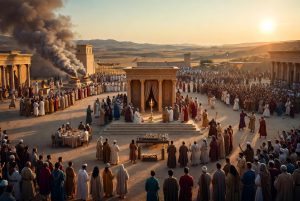
Aaron then lifts his hands toward the people and blesses them. He comes down from offering the sin offering, the burnt offering, and the peace offerings. Moses and Aaron enter the tent of meeting, then come out and bless the people. Then the glory of the Lord appears to all the people. Fire comes out from before the Lord and consumes the burnt offering and the portions of fat on the altar.
The people respond by shouting and falling on their faces.
That response is worth holding in the mind. They do not applaud Aaron as though he has performed well. They do not treat the moment like a religious program that succeeded. They shout because God has acted, and they fall on their faces because His glory is not casual. Joy and reverence stand together. The people are glad, but they are not loose. They are amazed, but not flippant. God has drawn near, and the right posture is worship with faces to the ground.
The fire from the Lord showed acceptance, but it also warned. The same divine fire that consumes the offering in Leviticus 9 will consume Nadab and Abihu in Leviticus 10 when they offer unauthorized fire before the Lord. The placement of these chapters is no accident. Fire from God is not a toy. Glory is not a mood. Nearness is not permission to handle holy things however man pleases.
Leviticus 9 therefore prepares the heart for both joy and fear. God receives the sacrifice. God blesses His people. God reveals His glory. But He does this in the way He has spoken. The next chapter will show what happens when priests treat nearness as license. The reader is supposed to feel the edge. Accepted worship and judged presumption stand side by side in the book because holiness is not adjustable.
Christians are not under the priesthood of Aaron. We do not bring calves, goats, rams, lambs, grain offerings, and peace offerings to a tabernacle altar. Christ has fulfilled the old covenant system. The sacrifices, priesthood, altar, and tabernacle pointed beyond themselves to a better mediator and a better sacrifice.
Hebrews makes the contrast plain. Aaron had to offer for himself and then for the people. Christ did not. Aaron entered an earthly sanctuary. Christ entered the true holy place. Aaron offered animal blood. Christ offered His own blood. Aaron’s work had to be repeated. Christ’s sacrifice was offered once for all. The glory of Leviticus 9 was real, but it belonged to the shadowed world of tabernacle worship. Christ brings the substance into view.
This does not make Leviticus 9 irrelevant. It makes the chapter heavier. If God required blood and mediation when the shadow was in place, Christians should not treat access through Christ as a small thing. The New Covenant does not lower the seriousness of drawing near. It gives a better basis for confidence.
Hebrews 10 says Christians have confidence to enter the holy place by the blood of Jesus. That confidence is not self-confidence. It is not emotional confidence. It is not the confidence of people who think sin is minor and God is relaxed. It is confidence built on blood, priesthood, and promise. We draw near because Christ has opened the way.
Leviticus 9 also exposes shallow ideas about worship. Many people want worship to feel glorious without asking whether it is governed by God. They want the sense of nearness without submission to the word. They want visible energy, emotional response, and religious excitement. But Leviticus 9 teaches that God’s glory is not summoned by human invention. The Lord appeared after Israel did what He commanded.
Worship is not made acceptable by intensity. A man can feel deeply and still disobey. A congregation can be moved and still be presumptuous. The question is not whether people felt something. The question is whether God authorized what was offered. Leviticus 9 will not let worship become a human experiment with religious language attached.
The chapter also teaches that blessing comes through mediation. Aaron blesses the people after the sacrifices. Moses and Aaron bless the people after entering and coming out from the tent of meeting. The people receive blessing because God has provided a priestly way for them to stand near. Under Christ, this truth is fulfilled in a far greater way. Every spiritual blessing comes through Him. He is the high priest who blesses His people from the place of accepted sacrifice.
Christians should also learn from the people’s posture. When God’s glory appears, they shout and fall on their faces. Reverence is not the enemy of joy. Fear of God is not the denial of grace. The people who know they have been received through sacrifice should rejoice deeply and bow low. Worship that has no joy forgets mercy. Worship that has no reverence forgets holiness.
Leviticus 9 presses both truths together. God wants His people near, but He does not surrender His holiness to bring them near. He provides sacrifice. He appoints mediation. He accepts worship according to His word. He blesses the people. He reveals His glory. The response is not casual appreciation. It is reverent worship.
In Christ, God has drawn near more fully than Israel could have imagined at the tabernacle. The Word became flesh and dwelt among us. The Son offered Himself. The veil was opened. The risen Lord now serves as high priest for His people. Through Him, Christians approach God with confidence, but that confidence must remain blood-deep and reverence-filled.
Leviticus 9 is not a dead account of ancient ceremony. It is a holy reminder that God’s glory is not handled casually. The God who draws near is the God who commands the altar. The people who receive His blessing must not forget the blood that made approach possible. Christ has brought the better sacrifice and the better priesthood. The only fitting response is worship that rejoices, obeys, and bows.
Questions for Reflection
- What does Leviticus 9 teach about the connection between God’s nearness and sacrifice?
- Why did Aaron need a sin offering before offering sacrifices for the people?
- How does the fire from the Lord in Leviticus 9 prepare the reader for the warning of Leviticus 10?
- How does Christ fulfill and surpass the priestly work seen in this chapter?
- Where are Christians tempted to seek the feeling of glory without submission to God’s word?
Prayer
Holy Father, teach us to draw near with reverence, not presumption. Thank You for providing the sacrifice and priesthood we could never provide for ourselves. Keep us from casual worship, from emotional religion that ignores Your word, and from confidence built on anything except the blood of Christ. Help us rejoice in Your mercy and bow before Your holiness. Through Jesus Christ, our perfect sacrifice and high priest, amen.
Takeaway
God draws near through the way He provides, and Christ has opened that way without making His glory casual.
---
Preach It
When God Draws Near in Glory
Text: Leviticus 9 New Testament Tie-In: Hebrews 7:26–28; Hebrews 10:19–22; John 1:14
Thesis
Leviticus 9 teaches that God draws near through sacrifice, priestly mediation, and obedient worship, and Christ fulfills that access as the perfect high priest and final sacrifice.
Simple Sermon Outline
1. God Promised to Appear
The people brought the offerings because the Lord said He would appear to them. God’s nearness was not man’s achievement. It was His mercy, given through the way He commanded.
2. God Required Sacrifice
Aaron offered for himself before offering for the people. Sin had to be addressed before blessing was pronounced. God’s glory did not cancel the need for blood.
3. God Accepted Obedient Worship
Fire came from before the Lord and consumed the offering on the altar. The worship was accepted because it followed what God commanded. Glory did not come through religious invention.
4. Christ Opens the Better Way
Aaron needed sacrifice for himself. Christ did not. Aaron served in the earthly tabernacle. Christ entered the true holy place. Aaron offered animal blood. Christ offered Himself once for all.
Conclusion and Invitation
Leviticus 9 shows God drawing near in glory, but never casually. Blood, priesthood, obedience, and reverence stand between sinful people and holy presence.
Christ has opened the better way through His own blood. Hear the gospel. Believe in Christ. Repent of sin. Confess Him as Lord. Be baptized for the forgiveness of sins. Then draw near through Christ with confidence, obedience, and reverence.