Strange Fire and the Danger of Worship Without Authority
Text: Leviticus 10 Series: Vayiqra — Called Near, Made Holy Theme: Worship before a holy God must be governed by His word, not human invention, emotion, or religious confidence. Christ Connection: Christ gives His people access to God, but His priesthood and sacrifice do not make worship casual or self-designed.
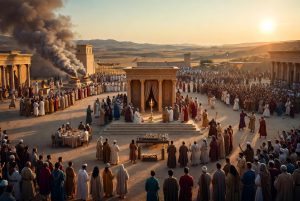
Leviticus 10 begins in the glow of Leviticus 9. Fire has come out from before the Lord and consumed the offering on the altar. The people have shouted and fallen on their faces. God has shown His glory. The priesthood has begun its public service. Everything is holy, weighty, and serious.
Then Nadab and Abihu step forward.
They are not outsiders. They are not pagans mocking Israel’s God. They are not strangers who wandered too close to the sanctuary. They are Aaron’s sons. They are priests. They have just been consecrated. They have seen blood applied, sacrifices offered, and divine fire fall before the congregation. They have been placed near holy things by God’s own command. That makes their sin more serious, not less.
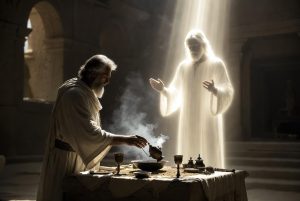
Leviticus says each man took his firepan, put fire in it, placed incense on it, and offered “strange fire before the LORD, which He had not commanded them” (Leviticus 10:1). The text does not say they were bored. It does not say they lacked religious feeling. It does not say they were trying to be openly rebellious in the way men usually imagine rebellion. The charge is sharper and simpler: they offered what God had not commanded.
Unauthorized worship is not made holy because religious men offer it.
That sentence needs to sit over the whole chapter. Nadab and Abihu were priests, but their office did not sanctify their disobedience. They were near the altar, but nearness did not protect them from judgment. They used priestly instruments, but proper tools cannot rescue improper worship. They handled incense, firepans, and sacred space, but God had not authorized what they brought.
Fire came out from the presence of the Lord and consumed them. They died before the Lord.
The same divine fire that accepted the offering in Leviticus 9 judged the priests in Leviticus 10. That connection must not be missed. God’s fire is not a religious effect. It is not a dramatic symbol that men can manage. It reveals both divine acceptance and divine judgment. The fire that consumed the sacrifice showed that God received what He commanded. The fire that consumed Nadab and Abihu showed that God rejected what He had not commanded.
Moses then speaks to Aaron: “It is what the LORD spoke, saying, ‘By those who come near Me I will be treated as holy, and before all the people I will be honored’” (Leviticus 10:3). Aaron remains silent.
There is no softer explanation given. God does not apologize for His holiness. Moses does not say the punishment was severe but understandable in that ancient setting. He does not tell Aaron that God knew their hearts were sincere. He does not treat the event as a tragic misunderstanding. He gives the divine interpretation: those who come near must treat God as holy.
The nearer the service, the heavier the responsibility.
That truth runs through Leviticus. God calls sinners near, but He defines the way of approach. Priests do not get to improvise because they are priests. Worshipers do not get to redesign worship because they feel thankful. Leaders do not get to innovate because they are influential. Sacred nearness intensifies accountability. Nadab and Abihu sinned at the very place where reverence should have been most guarded.
Moses commands that their bodies be carried outside the camp. Then he tells Aaron and his remaining sons not to uncover their heads or tear their clothes, lest they die and wrath come upon all the congregation. The wider family of Israel may mourn, but Aaron and his sons must not leave the doorway of the tent of meeting. The anointing oil of the Lord is upon them.
That is hard for modern ears. The grief is real, but priestly duty remains holy. Aaron has lost two sons, but God’s sanctuary is not suspended by human sorrow. The Lord’s holiness still governs the moment. The priesthood cannot turn from its charge, even under the weight of family tragedy.
This does not make God cruel. It makes God God. Human grief does not outrank divine holiness. Family loyalty does not excuse priestly disobedience. Aaron’s silence becomes one of the most sobering responses in the chapter. He does not argue. He does not accuse God. He does not defend his sons. He stands under the word of the Lord.
The chapter then turns to another warning. The Lord speaks directly to Aaron and commands him and his sons not to drink wine or strong drink when they come into the tent of meeting, so they will not die. They must distinguish between the holy and the profane, between the unclean and the clean, and they must teach Israel all the statutes the Lord has spoken through Moses.
The command about wine may suggest that Nadab and Abihu’s sin involved impaired judgment, though the text does not directly say so. What the text does say is enough. Priests needed clear minds. They had to make distinctions. They had to teach the word of God. A blurred mind in holy service is dangerous because God’s people need men who can tell the difference between what belongs to God and what must be kept away from Him.
That is not a minor priestly duty. Leviticus depends on distinctions: clean and unclean, holy and common, commanded and unauthorized, acceptable and unacceptable. When priests lose the ability or willingness to make those distinctions, the people suffer. Worship becomes confused. Sin becomes negotiable. Holiness becomes a word without edges.
God did not appoint priests to entertain Israel. He appointed them to serve, distinguish, and teach. The mouth that explains God’s statutes must be governed by God’s statutes. The hands that handle holy things must not become careless. The man who stands near the altar must not treat the altar like his stage.
Leviticus 10 also corrects the modern habit of separating sincerity from authority. Many assume that if a worship practice is heartfelt, meaningful, beautiful, or emotionally moving, God must accept it. Nadab and Abihu destroy that assumption. The issue in the text is not whether they felt spiritual. The question is whether the Lord commanded what they offered.
That is why this chapter remains necessary. People still talk as though worship belongs to human preference. They ask, “What is wrong with it?” when the better question is, “Where did God authorize it?” They ask whether something feels reverent, attracts people, sounds beautiful, or seems useful. Leviticus 10 presses deeper. God is not honored when man brings unauthorized fire and then asks heaven to admire the smoke.
Christians are not under the Levitical priesthood. We do not bring incense into the tabernacle. We do not serve at Aaron’s altar. Nadab and Abihu’s specific act belonged to the old covenant sanctuary system. But the truth underneath the judgment has not died. God must be treated as holy by those who come near Him.
The New Covenant does not turn worship into self-expression. Christ did not die to free men from the authority of God. He died to bring sinners to God. That access is by blood, priesthood, and covenant promise, not by human invention. Hebrews says believers have confidence to enter the holy place by the blood of Jesus, but the same passage calls them to draw near with sincere hearts, clean consciences, and faithful endurance. Confidence in Christ is not license to handle worship carelessly.
Jesus also says that true worshipers must worship the Father in spirit and truth (John 4:24). Spirit does not mean emotional intensity detached from revelation. Truth does not mean cold correctness without reverence. The Father seeks worshipers who come according to what He has revealed. Worship that ignores truth is not improved by feeling. Worship that lacks reverence is not rescued by outward accuracy. God requires both the heart and the word to come under His rule.
Leviticus 10 should sober every preacher, teacher, elder, song leader, parent, and Christian. It warns against religious confidence without submission. It warns against leadership that forgets the difference between holy and common. It warns against public worship that treats silence as permission and preference as authority. It warns against the idea that closeness to holy things makes disobedience less dangerous.
The death of Nadab and Abihu also teaches that God’s holiness is not adjusted by man’s role. Aaron’s sons were judged though they were priests. Religious position did not shield them. The same principle still bites. A preacher can mishandle Scripture. An elder can blur the line between truth and error. A congregation can normalize unauthorized practice. A family can treat God’s commands as optional while maintaining religious language. Nearness to religious work is not the same as submission to God.
This chapter also exposes a shallow view of grace. Grace is not God pretending worship does not matter. Grace is not God becoming casual because Christ has come. Grace brings sinners near through the blood of Christ and then teaches them to deny ungodliness. The cross does not say, “God no longer cares how He is approached.” The cross says God cared so much that access required the death of His Son.
That should make Christians more reverent, not less.
Leviticus 10 is painful because it refuses to flatter us. It tells us that worship can be wrong even when it looks religious. It tells us that priests can sin while standing near the altar. It tells us that God’s word, not man’s intention, defines acceptable service. It tells us that holiness is not a soft atmosphere but the character of God pressed upon His people.
The chapter ends with another priestly failure handled differently. Aaron’s remaining sons did not eat the sin offering as commanded. Moses becomes angry, but Aaron explains that after such events, eating the sin offering would not have been fitting in his sight. Moses accepts the explanation. This ending shows that Leviticus 10 is not about a God eager to kill over every human weakness. The earlier judgment was not arbitrary. Nadab and Abihu crossed a holy line by offering what God had not commanded. The later matter is handled with priestly discernment under grief.
That distinction matters because God’s holiness is not chaos. He is not unpredictable. He had spoken. They violated His command. His judgment was tied to His revealed will.
For Christians, Leviticus 10 must not be left in the past as an uncomfortable story about ancient priests. It presses the church to recover reverence. Worship is not ours to redesign. Sincerity does not create authority. Emotion does not sanctify presumption. Tradition does not excuse disobedience. Popularity does not make worship acceptable. God is still holy, and those who draw near must honor Him as holy.
Christ has opened the way to God. His blood gives confidence. His priesthood gives access. His covenant gives mercy. But none of that makes strange fire safe. The better sacrifice calls for deeper reverence, not lighter worship. The Son of God did not die so His people could treat the Father’s will as optional.
Questions for Reflection
- Why is it important that Nadab and Abihu were priests, not outsiders, when they offered strange fire?
- What does Leviticus 10 teach about the difference between sincerity and authority in worship?
- Where are Christians tempted to ask, “What is wrong with it?” instead of, “Where has God authorized it?”
- How does Christ give confidence to draw near without making worship casual?
- What distinctions between holy and common, clean and unclean, truth and error need to be recovered in your own life?
Prayer
Holy Father, teach us to treat You as holy. Forgive us for the times we have trusted sincerity, preference, habit, or emotion more than Your revealed word. Guard us from worship that pleases ourselves while dishonoring You. Thank You for Jesus Christ, whose blood gives true access and whose priesthood gives confidence. Make us reverent, obedient, clear-minded, and grateful as we draw near through Him. Amen.
Takeaway
God must be treated as holy by those who draw near, and Christ’s blood gives access without giving man permission to redesign worship.
---
Preach It
Strange Fire and the Danger of Worship Without Authority
Text: Leviticus 10 New Testament Tie-In: John 4:24; Hebrews 10:19–22; Hebrews 12:28–29
Thesis
Leviticus 10 teaches that worship before a holy God must be governed by His word, and Christ gives access without making worship casual or self-designed.
Simple Sermon Outline
1. Nadab and Abihu Were Near Holy Things
They were priests, sons of Aaron, and newly consecrated for service. Their sin did not come from outside the camp, but from men standing near the altar. Religious position does not make disobedience safe.
2. They Offered What God Had Not Commanded
The text identifies the sin clearly: they offered strange fire before the Lord, which He had not commanded them. Worship is not authorized by sincerity, beauty, emotion, or human preference. God’s word must govern what is brought before Him.
3. God Defended His Holiness
Fire came out from before the Lord and consumed them. Moses gave the divine explanation: those who come near God must treat Him as holy. The same fire that accepted the sacrifice in Leviticus 9 judged presumption in Leviticus 10.
4. Christ Gives Access with Reverence
Christians are not under the Levitical priesthood, but God’s holiness has not changed. Through Christ’s blood we draw near with confidence, but that confidence must never become carelessness. True worship must be in spirit and truth.
Conclusion and Invitation
Leviticus 10 warns every generation that worship is not man’s property. God decides how He will be approached. Strange fire is still strange, even when offered by religious hands.
Christ has opened the way through His own blood. Hear the gospel. Believe in Christ. Repent of sin. Confess Him as Lord. Be baptized for the forgiveness of sins. Then worship and live as one who treats God as holy.