Cleansed and Restored — The Mercy Behind the Ritual
Text: Leviticus 14 Series: Vayiqra — Called Near, Made Holy Theme: God did not merely expose uncleanness; He also provided a way for the cleansed person to be restored to the camp, the sanctuary, and full fellowship. Christ Connection: Christ is the one who truly cleanses the unclean, restores the excluded, and brings sinners near through His blood.
Leviticus 13 showed uncleanness exposed. Leviticus 14 shows cleansing confirmed and fellowship restored. The order matters because God does not expose uncleanness for the sake of shame. He exposes it so that what is unclean may be dealt with truthfully, and when cleansing comes, He provides a path back.
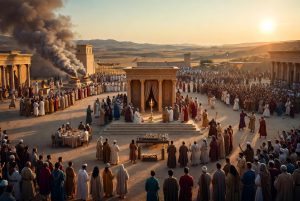
This chapter is long and detailed, but the burden is merciful. The person who had been outside the camp does not stay there forever if God has granted cleansing. The priest goes outside the camp. The cleansed person is examined. Birds are used. Blood and water appear. The person washes, shaves, waits, brings offerings, and is restored. The ritual is careful because restoration to God’s people is not casual. Mercy has order. Cleansing has meaning. Return to fellowship happens on God’s terms.
The priest’s movement outside the camp is striking. In Leviticus 13, the unclean person had to live outside the camp. In Leviticus 14, the priest goes outside to examine him. The priest does not wait inside the sanctuary and tell the cleansed man to figure out his own way back. God provides mediation. The one who had been excluded must be examined and brought through the appointed process.
The priest did not create the cleansing. He confirmed it. If the disease had been healed, then the ritual of restoration began. This distinction is important. Leviticus 14 is not magic. The ceremony does not pretend uncleanness is gone when it remains. The priest first examines. If cleansing has taken place, the ritual marks the person’s return. God’s mercy is not sentimental denial. It deals with reality.
The first part of the ritual uses two live clean birds, cedar wood, scarlet string, and hyssop. One bird is killed over fresh water in an earthenware vessel. The live bird, along with the cedar wood, scarlet string, and hyssop, is dipped in the blood of the bird that was killed. The priest sprinkles the cleansed person seven times, pronounces him clean, and releases the live bird into the open field.
The scene is vivid. Blood, water, death, sprinkling, and release all stand together. The text does not give permission to invent meanings for every object, but the broad force is plain. Cleansing is not treated lightly. Blood is involved. Water is involved. A life is taken. Another bird is released alive. The person who had been marked by uncleanness is now publicly pronounced clean and begins the way back into the camp.
Then the cleansed person washes his clothes, shaves off all his hair, bathes in water, and may enter the camp. Even then, he remains outside his tent for seven days. On the seventh day, he shaves again—head, beard, eyebrows, all hair—and washes his clothes and body. Restoration comes in stages. The man who had been unclean is not casually dropped back into ordinary life. God marks the seriousness of cleansing and the seriousness of return.
On the eighth day, offerings are brought. Two male lambs without defect, one ewe lamb, fine flour mixed with oil, and oil are required. If the person is poor, God provides a reduced offering. The chapter makes room for poverty without removing the need for cleansing and atonement. The poor man still comes by God’s appointed way, but God does not shut him out because he cannot bring what the wealthy can bring.
The guilt offering receives special attention. The priest takes some of its blood and applies it to the right ear lobe, the right thumb, and the right big toe of the one being cleansed. Then oil is applied in the same places, and the rest of the oil is placed on the person’s head. This pattern recalls priestly consecration in Leviticus 8, where blood was placed on Aaron and his sons. The restored person is not made a priest, but his whole life is marked for renewed consecration. Ear, hand, and foot stand for hearing, doing, and walking under God.
This is not shallow restoration. God is not merely removing a social problem. The cleansed person is being brought back into life before Him. The ear must hear differently. The hand must serve rightly. The foot must walk cleanly. Restoration is not permission to return unchanged to the old way of life. It is mercy that brings a man back under the holy rule of God.
That point needs to be heard. Many people want forgiveness without consecration. They want to be declared clean so they can resume ownership of themselves. Leviticus 14 will not allow that. Cleansing brings a person back to God, and belonging to God reaches the ear, the hand, and the foot. The man restored to the camp is not restored to self-rule. He is restored to holy life among God’s people.
The chapter also deals with houses. When Israel comes into the land of Canaan, a mark may appear in a house. The owner must report it. The priest examines the house. The house may be emptied, shut up, scraped, repaired, or, if the mark persists, torn down and carried outside the city to an unclean place. If the mark does not return, the house is cleansed with a ritual involving birds, cedar wood, scarlet string, and hyssop.
A house could not be kept simply because it was familiar. If corruption persisted in the walls, the house had to come down. God was teaching Israel that uncleanness could attach not only to bodies but also to places where people lived. The home was not outside God’s concern. The walls, the vessels, the occupants, and the shared life of the household stood under His holiness.
This part of the chapter still presses. Christians are not under the house-cleansing laws of Leviticus 14, and we must not turn them into superstition. But we should not miss the moral weight. Some corruption becomes structural. It gets into the walls of a home, a family, a congregation, or a practice. A little scraping may not be enough if the rot keeps returning. Sometimes the only faithful answer is removal.
The text is careful here too. The house is not destroyed at the first suspicion. It is inspected, shut up, reexamined, and treated. God’s people must not become reckless destroyers. But if the mark keeps spreading, sentiment cannot save the house. Persistent uncleanness must be removed.
The mercy of Leviticus 14 is not soft. It is strong mercy. It brings the excluded near, but it does not lie about uncleanness. It restores the cleansed, but it does not treat restoration as casual. It provides for the poor, but it does not remove the need for sacrifice. It examines the house, but it does not preserve what remains corrupted.
That covenant distinction must stay in place. Leviticus 14 belongs to the Law of Moses, and Christians are not commanded to practice its inspection rites, bird rituals, washings, or house-cleansing procedures. The chapter still teaches because it reveals how seriously God treated uncleanness, isolation, cleansing, restoration, and priestly mediation. Those truths come into full view in Christ, not in a restored Levitical system.
Christians must handle this chapter through Christ. We do not bring birds, lambs, flour, oil, or cleansing rituals to Levitical priests. We do not wait for a priest to inspect our skin or our houses. The Law of Moses has been fulfilled. The priesthood has changed. Christ has offered Himself once for all. Cleansing now rests on His blood, not on the ceremonies of Leviticus.
But Christ does not make cleansing less serious. He makes it real.
In the Gospels, lepers come to Jesus, and He cleanses them. Luke records ten lepers who stood at a distance and cried, “Jesus, Master, have mercy on us!” Jesus told them, “Go and show yourselves to the priests.” As they were going, they were cleansed. One returned, glorifying God with a loud voice, and fell on his face at Jesus’ feet, giving thanks. He was a Samaritan. Jesus asked where the other nine were.
That account fits Leviticus 14 perfectly. The cleansed were to show themselves to the priests. Jesus honors the Law while demonstrating His own authority to cleanse. The tragedy is that only one returned to give thanks. Cleansing should produce gratitude. Restoration should drive a man back to Christ in worship, humility, and obedience.
The New Testament gives the fuller cleansing Leviticus anticipated. Hebrews says the blood of Christ cleanses the conscience from dead works to serve the living God. That is deeper than skin. Deeper than a garment. Deeper than a house. Christ cleanses the conscience. He reaches the inward place where guilt, defilement, and dead works cling to the soul. Leviticus could declare a person clean for return to the camp. Christ cleanses sinners for service to God.
This chapter also teaches the church how to think about restoration. Restoration is not pretending nothing happened. It is not rushing people back without examination, repentance, cleansing, or renewed consecration. But it is also not leaving people outside forever after God has cleansed them. Some Christians are better at exclusion than restoration. Others are better at shallow acceptance than honest cleansing. Leviticus 14 rebukes both.
When God cleanses, His people must not keep a man outside the camp. When uncleanness remains, His people must not declare him clean. Truth and mercy are not enemies. God exposes uncleanness in chapter 13 and restores the cleansed in chapter 14. Both are holy. Both are necessary.
This applies to personal repentance as well. A man who has sinned may want to skip the hard work of return. He wants relief from guilt, but not a renewed ear, hand, and foot. He wants the comfort of being accepted, but not the consecration of being changed. Leviticus 14 presses him further. Cleansing is not a label pasted over the old life. The restored person belongs to God with what he hears, what he does, and where he walks.
The Christian gospel gives the stronger word. Christ does not merely improve the unclean man’s condition. He cleanses, restores, and commands him to walk in newness of life. Baptism itself shows this gospel pattern: death, burial, and resurrection with Christ; cleansing by His blood; a new life under His lordship. No animal blood can do that. No priestly inspection can create that. Christ does what the Law could only prepare us to understand.
Leviticus 14 is full of mercy because it shows that uncleanness is not always the final word. Outside the camp is not the end when God provides cleansing. The diseased man may come back. The poor may bring the offering they can afford. The house may be restored if the corruption is removed. The priest goes out, examines, declares, and brings back through the appointed way.
Christ is better than the priest in Leviticus. He does not only inspect from the outside. He enters our uncleanness without becoming unclean. He bears sin without committing sin. He sheds His own blood. He cleanses the conscience. He restores the excluded. He brings sinners near to God.
The mercy behind the ritual is not that God lowers His holiness. It is that God provides cleansing strong enough to bring the unclean back. That is still the hope of the gospel. The sinner does not need God to pretend. He needs God to cleanse. He does not need a false verdict. He needs the blood of Christ. He does not need to return to the old house with the spreading stain. He needs a life restored, consecrated, and brought under the holy rule of God.
Questions for Reflection
- Why is it important that Leviticus 14 follows the exposure of uncleanness in Leviticus 13?
- What does the restoration ritual teach about mercy, cleansing, and renewed consecration?
- How does the blood and oil on the ear, hand, and foot press the whole life under God’s rule?
- What does the law about infected houses teach about persistent corruption in homes, habits, families, or congregations?
- How does Christ provide a cleansing deeper than any Levitical ritual could give?
Prayer
Holy Father, thank You for mercy that does not lie and holiness that does not bend. Teach us to seek true cleansing, not shallow relief. Forgive us for wanting restoration without consecration and comfort without change. Thank You for Jesus Christ, who cleanses the conscience, restores the excluded, and brings sinners near by His blood. Mark our ears, hands, and feet for Your service. Through Christ our Lord, amen.
Takeaway
God’s mercy does not leave the unclean outside forever; through Christ, He cleanses, restores, and consecrates sinners for holy life.
---
Preach It
Cleansed and Restored — The Mercy Behind the Ritual
Text: Leviticus 14 New Testament Tie-In: Luke 17:11–19; Hebrews 9:13–14
Thesis
Leviticus 14 teaches that God provides restoration for the cleansed, and Christ brings the deeper cleansing that restores sinners to God and consecrates the whole life.
Simple Sermon Outline
1. God Did Not Leave the Cleansed Outside
The priest went outside the camp to examine the one who had been unclean. If cleansing had taken place, God provided a way back. Exposure was not the end when cleansing was real.
2. Restoration Required Blood, Washing, and Consecration
The ritual involved blood, water, washing, shaving, waiting, offerings, and oil. The restored person came back carefully, not casually. Mercy had order.
3. The Whole Life Was Marked for God
Blood and oil were placed on the ear, thumb, and toe. The restored person was brought back to hear, serve, and walk under God’s rule. Cleansing was not permission for self-rule.
4. Christ Cleanses Deeper Than Leviticus Could
Jesus cleansed lepers and sent them to the priests. Hebrews shows the greater cleansing: His blood cleanses the conscience from dead works to serve the living God.
Conclusion and Invitation
Leviticus 14 shows mercy with holiness still intact. God makes a way for the unclean to be restored, but restoration is never casual.
Christ can cleanse what sin has defiled. Hear the gospel. Believe in Christ. Repent of sin. Confess Him as Lord. Be baptized for the forgiveness of sins. Then walk as one restored and consecrated to God.