The Day of Atonement — Blood, Mercy, and Access to God
Text: Leviticus 16 Series: Vayiqra — Called Near, Made Holy Theme: The Day of Atonement stood at the center of Israel’s worship because sin defiled the people, the priesthood, the altar, and the sanctuary, and only God could provide cleansing and continued access. Christ Connection: Christ is the true high priest and final sacrifice who entered the greater holy place by His own blood and secured eternal redemption.
Leviticus 16 opens under the shadow of death. The chapter begins by looking back to Nadab and Abihu, the sons of Aaron, who died when they approached the Lord in a way He had not commanded. That memory is not background decoration. It sets the weight of the chapter. Access to God is holy ground. Even Aaron, the high priest, cannot enter the holy place whenever he chooses.
The Lord tells Moses, “Tell your brother Aaron that he shall not enter at any time into the holy place inside the veil.” Aaron wore the priestly garments. Aaron was set apart. Aaron stood closer than the rest of Israel. But nearness did not give him permission to treat God casually. He could not come any time, any way, or on his own terms.
That is where the Day of Atonement begins: with restricted access.
Modern religion often wants nearness without fear, access without blood, worship without restraint, and mercy without holiness. Leviticus 16 refuses that kind of religion. God dwelt among Israel, but His presence was not common space. The veil was not a decorative curtain. The holy place was not a stage. The most holy place was not open to religious curiosity. The God who called His people near also defined the way they could come.
Once a year, the high priest entered. Not every day. Not every priest. Not with empty hands. Not without blood.
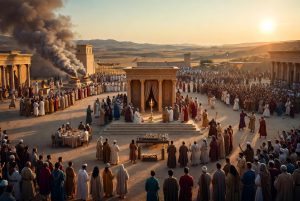
The chapter gives careful instructions. Aaron had to bring a bull for his own sin offering and a ram for a burnt offering. He had to bathe his body and put on holy linen garments. He had to take two goats from the congregation for a sin offering and one ram for a burnt offering. Lots were cast over the two goats: one for the Lord and one for the scapegoat. The bull was offered for Aaron and his household. Blood was taken inside the veil and sprinkled on and in front of the mercy seat. The goat for the Lord was then killed as a sin offering for the people, and its blood was brought inside the veil.
The ritual is not casual, hurried, or man-made. It is deliberate because sin has invaded everything.
Leviticus 16 says atonement had to be made for the holy place because of the uncleannesses of the sons of Israel and because of their transgressions in regard to all their sins. The tent of meeting needed atonement. The altar needed atonement. The priests needed atonement. The people needed atonement. Sin was not treated as a private stain with no public consequence. Israel’s uncleanness polluted the worship space where God dwelt among them.
This is one of the strongest truths in Leviticus: sin spreads farther than sinners want to admit. It does not stay neatly locked inside the individual. It defiles relationships, worship, leadership, homes, congregations, and the places where people claim to meet God. The Day of Atonement forced Israel to face the contamination of sin at the deepest level of covenant life.
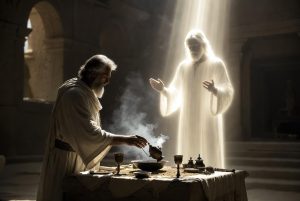
Aaron himself needed blood before he could bring blood for the people. That is a severe mercy. The high priest was not above the problem. He represented Israel, but he also shared Israel’s weakness. Before he could make atonement for the congregation, he had to offer for himself and his household. The priest who approached God on behalf of sinners was also a sinner.
Hebrews presses this truth with force. Under the Law, priests had weakness. They died. They had to offer sacrifices for their own sins and then for the sins of the people. The old priesthood could serve God’s purpose, but it could not be final. Israel needed more than a priest who had to cleanse himself first. Israel needed a holy, innocent, undefiled high priest who could offer a sacrifice strong enough to end the repetition.
Leviticus 16 gives the shadow. Christ brings the substance.
The two goats together show the fullness of what God was teaching Israel. The first goat was killed, and its blood was brought into the holy place. Blood addressed guilt before God. Atonement required life given in the place of the guilty. No man entered the most holy place with speeches, feelings, intentions, or excuses. He entered with blood.
The second goat was presented alive. Aaron laid both hands on its head and confessed over it all the iniquities, transgressions, and sins of the sons of Israel. Then the goat was sent away into the wilderness by the hand of a man who stood ready. The goat bore their iniquities to a solitary land.
Blood and removal belong together. Sin must be atoned for before God, and guilt must be carried away from the people. Israel watched this drama once a year. One goat dies. One goat departs. The holy place is cleansed. The people are cleansed. God provides a way for the camp to continue with Him in their midst.
The scapegoat should not be turned into fanciful speculation. The text does not invite us to build a strange doctrine out of the wilderness or the goat itself. The force is enough without invention: confessed sin is carried away by God’s appointed means. The people do not carry it out themselves. They do not explain it away. They do not vote it away. God provides a way for sin to be removed.
That picture prepares the mind for the gospel. John the Baptist points to Jesus and says, “Behold, the Lamb of God who takes away the sin of the world!” Christ does not merely cover sin in a ceremonial way. He bears it. He removes it. He brings the reality toward which the Day of Atonement was always pointing.
The chapter also commands Israel to humble their souls. The Day of Atonement was not a spectacle for entertainment. It was not religious pageantry detached from repentance. Israel was to cease from work and humble themselves before God. Atonement was not treated as a technical ritual that allowed the heart to remain proud. The day demanded lowliness because sin had made the day necessary.
There is a needed warning here. People can talk about atonement in a way that remains cold, clever, and untouched. They can discuss sacrifice, priesthood, blood, typology, and fulfillment while never humbling the soul. Leviticus 16 will not allow that. Atonement is not a topic for detached curiosity. It is the answer to guilt before the holy God.
Christians are not under the annual Day of Atonement. We do not wait for one day each year when a Levitical high priest enters the earthly sanctuary. We do not bring bulls and goats. We do not send a scapegoat into the wilderness. The old covenant order has been fulfilled and surpassed. Hebrews says the Law had only a shadow of the good things to come, not the very form of things. The repetition itself proved the work was not final.
But Leviticus 16 is not dead religious furniture. It teaches why Christ had to come, why His blood matters, why His priesthood is better, and why access to God cannot be treated lightly.
Hebrews 9 brings the Day of Atonement into full view. Christ came as high priest of the good things to come. He did not enter a holy place made with hands. He entered through the greater and more perfect tabernacle, not of this creation. He did not enter by the blood of goats and calves, but through His own blood. He obtained eternal redemption.
That is the difference between shadow and substance. Aaron entered once a year and came back out because the work had to be repeated. Christ entered the true holy place with His own blood and accomplished what no annual ceremony could accomplish. The blood of animals could cleanse ceremonially under the Law, but the blood of Christ cleanses the conscience from dead works to serve the living God.
Hebrews 10 presses even harder. Every priest stood daily ministering and offering the same sacrifices again and again, sacrifices which could never take away sins. But Christ, having offered one sacrifice for sins for all time, sat down at the right hand of God. The old priest stood because the work continued. Christ sat because His sacrifice was complete.
That sentence should steady the soul. The Christian does not live waiting for another atonement day. Christ has offered Himself once for all. The believer does not need a yearly priestly entrance into an earthly holy place. Christ has opened access. The cleansed conscience does not rest on the blood of bulls and goats. It rests on the blood of the Son of God.
But confidence must not become casualness. Hebrews 10 does not say, “Since Christ opened the way, treat holiness lightly.” It says we have confidence to enter the holy place by the blood of Jesus, by a new and living way, and therefore we draw near with a sincere heart in full assurance of faith, having our hearts sprinkled clean from an evil conscience and our bodies washed with pure water. Access is bold because of Christ, not careless because of human preference.
The cross did not make reverence unnecessary. It made reverent access possible.
Leviticus 16 also speaks to how we think about sin. The Day of Atonement gathered every category: uncleanness, transgression, and sin. God did not treat guilt as a vague feeling. He named rebellion, contamination, and failure. The confession over the live goat was comprehensive. Nothing about the people’s sin was too small for God’s holiness or too large for His appointed atonement.
That confronts two errors. One error minimizes sin until atonement sounds excessive. The other magnifies sin until mercy sounds impossible. Leviticus 16 corrects both. Sin is so serious that blood must be brought into the holy place. Mercy is so real that God provides the blood and carries guilt away.
A Christian who reads Leviticus 16 should not come away with shallow self-esteem. He should come away with reverent gratitude. Sin polluted more than Israel wanted to see. God provided more mercy than Israel could have invented. Christ fulfilled more than the Law could finish.
The church also needs the Day of Atonement’s lesson about holiness in worship. Aaron could not enter whenever he wanted. He could not innovate his way through the veil. He could not rearrange the ritual to fit his own preference. God’s instructions governed access. If that was true under the shadow, Christians should not treat the substance with less reverence. Worship through Christ is not self-designed religion. The blood that opened access also teaches us the cost of that access.
This is especially needed in an age that mistakes informality for sincerity. People assume that if they feel relaxed, worship must be more authentic. But Scripture never measures worship by how casual man feels. God has always cared whether His people approach Him according to His word. Christ has removed the old veil, not the authority of God.
Leviticus 16 leaves us with blood before the mercy seat and guilt carried away into the wilderness. It leaves us with a high priest who must cleanse himself and a people who must humble their souls. It leaves us with a holy God who dwells among sinners only because He provides atonement.
Then Hebrews opens the fuller glory. Christ is the better high priest. Christ is the better sacrifice. Christ enters the better sanctuary. Christ brings the better cleansing. Christ secures eternal redemption. Christ sits down because the offering is complete.
The Day of Atonement preached year after year: sin defiles, blood is required, access is restricted, guilt must be removed, and God must provide the way. The gospel announces that the way has been provided in Jesus Christ once for all.
No one comes near God by ignoring sin. No one enters by sincerity alone. No one passes through the veil by religious creativity. The only safe way into the presence of the holy God is through the blood God Himself has given.
Questions for Reflection
- Why does Leviticus 16 begin by remembering the death of Nadab and Abihu?
- What does the Day of Atonement teach about the way sin defiles people, priests, altar, and sanctuary?
- Why did Aaron need sacrifice for himself before serving on behalf of the people?
- How do the two goats help Israel understand both atonement before God and removal of guilt from the people?
- How does Hebrews 9–10 show that Christ fulfills and surpasses the Day of Atonement?
- Where do you need greater reverence for the access Christ opened by His blood?
Prayer
Holy Father, teach us to humble our souls before the blood of Christ. Forgive us for treating sin lightly, worship casually, and access to You as though it were our right instead of Your mercy. Thank You for Jesus Christ, our great high priest, who entered the true holy place by His own blood and secured eternal redemption. Cleanse our consciences, remove our guilt, and teach us to draw near with reverence, confidence, and obedience. Through Christ our Lord, amen.
Takeaway
The Day of Atonement declared that sinners need blood, mercy, and a God-given way of access, and Christ has fulfilled that need once for all.
---
Preach It
The Day of Atonement — Blood, Mercy, and Access to God
Text: Leviticus 16 New Testament Tie-In: Hebrews 9:11–14; Hebrews 10:1–22
Thesis
The Day of Atonement teaches that sin defiles everything and access to God requires blood, and Christ fulfills that day by entering the true holy place with His own blood once for all.
Simple Sermon Outline
1. Access to God Was Restricted
Aaron could not enter the holy place whenever he wanted. God defined the time, the way, the priestly garments, the sacrifices, and the blood. Nearness was mercy, not permission for casual worship.
2. Sin Defiled the People and the Sanctuary
Atonement was made for the priest, the people, the holy place, the tent, and the altar. Sin was not treated as a private problem with no public effect. It polluted covenant life before God.
3. Blood Was Brought Before God
The high priest entered with blood. No speech, intention, or feeling could replace it. Sin required life given before the holy God.
4. Guilt Was Carried Away
The live goat bore the iniquities of Israel into a solitary land. God taught His people that sin must be both atoned for and removed by His appointed means.
5. Christ Fulfilled the Day Once for All
Christ entered the greater holy place by His own blood. He did not offer an animal. He offered Himself. He cleansed the conscience and opened access to God.
Conclusion and Invitation
Leviticus 16 points to the cross with blood, fear, mercy, and hope. Sin is too serious for man-made religion, but God has provided the way through Christ.
Come through the blood of the Son. Hear the gospel. Believe in Christ. Repent of sin. Confess Him as Lord. Be baptized for the forgiveness of sins. Then draw near with confidence and reverence, because Christ has opened the way.