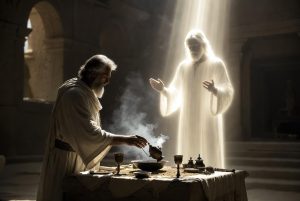
Be Holy Because I Am Holy
Text: Leviticus 19 Series: Vayiqra — Called Near, Made Holy Theme: God called Israel to holiness that reached worship, family, justice, labor, speech, neighbor love, sexual purity, mercy, and daily conduct. Christ Connection: Peter brings Leviticus 19 into the Christian life by showing that the holy God still calls His redeemed people to be holy in all their behavior through Christ.
Leviticus 19 stands near the heart of the book, and it does not allow holiness to stay trapped at the altar. The chapter opens with one of the clearest commands in Scripture: “You shall be holy, for I the LORD your God am holy” (Leviticus 19:2). That sentence governs everything that follows. God’s people must be holy because God is holy.
The command is not vague religious language. Leviticus 19 shows what holiness looks like when it enters the home, the field, the courtroom, the marketplace, the mouth, the heart, the body, and the treatment of the weak. Holiness is not reduced to ritual, but neither is it detached from worship. It reaches the whole life because the God who calls His people near is holy in all that He is.
The chapter begins with reverence in the home and before God. “Every one of you shall reverence his mother and his father, and you shall keep My sabbaths; I am the LORD your God” (Leviticus 19:3). Family honor and sacred time stand side by side. Israel was not allowed to pretend that worship could be serious while home life was corrupt. The child who despised father and mother was not practicing holiness. The person who treated God’s appointed time lightly was not practicing holiness either.
Then God forbids idols and molten gods. Holiness cannot live with divided worship. Israel could not honor the Lord with lips while shaping another god with hands. Idolatry is not only bowing before carved images. It is any rival loyalty that takes what belongs to God. Leviticus presses this early because holiness begins with undivided allegiance.
The chapter then touches peace offerings. Even fellowship meals had to be governed by God’s instruction. The meat was to be eaten within the appointed time, and what remained on the third day was to be burned. Worship was not left to personal adjustment. Fellowship with God was not casual eating with religious meaning added later. God defined how the offering was received.
But Leviticus 19 quickly moves from altar to field. When Israel reaped the harvest, they were not to strip the field bare. They were not to gather every corner, every fallen grape, every last piece for themselves. The poor and the stranger were to be remembered. God’s people had to build mercy into their economy.
This command exposes selfishness dressed up as good management. A man could say, “It is my field. It is my harvest. I worked for it.” God said the corners were not his to consume. The land, the rain, the increase, and the harvest all belonged to the Lord before they ever filled the owner’s barn. Holiness touched how much a man kept and whether he left room for the needy to live.
The poor were not treated as invisible. The stranger was not treated as disposable. God’s holiness required compassion with structure. Israel was not commanded merely to feel pity. They were commanded to leave provision. Mercy had to become practice.
Leviticus 19 then turns to honesty: do not steal, do not deal falsely, do not lie to one another, do not swear falsely by God’s name. Holiness reaches the tongue and the transaction. A man is not holy because he attends worship while cheating in business, lying in conversation, or twisting truth to protect himself. False speech profanes the name of the Lord when it claims the shelter of religion.
The chapter keeps pressing. Do not oppress your neighbor. Do not rob him. Do not keep the wages of a hired man overnight. The worker’s pay was not to be held hostage by the strong. God sees how employers treat laborers. He sees whether power is used for righteousness or advantage. Holiness is not only what a man sings; it is what he pays, withholds, signs, promises, and delays.
Then comes a command that reveals God’s concern for the vulnerable: “You shall not curse a deaf man, nor place a stumbling block before the blind, but you shall revere your God; I am the LORD” (Leviticus 19:14). A deaf man may not hear the curse. A blind man may not see the trap. God sees both. The command reaches sins that victims may never fully know and society may never punish. Fear of God must govern behavior when the vulnerable cannot defend themselves.
This is holiness with teeth. God does not measure righteousness only by what can be exposed in public. He commands integrity where the victim is weak, where the abuse can be hidden, where the powerful think no one is watching. Reverence for God is the answer to secret cruelty.
The chapter also speaks to justice. Israel was not to be partial to the poor or defer to the great, but to judge the neighbor fairly. That balance matters because injustice can wear more than one costume. Some favor the rich because they are powerful. Others twist judgment in favor of the poor because pity replaces truth. God forbids both. Justice must not be for sale, and it must not be bent by sentiment.
Leviticus 19 also forbids slander. “You shall not go about as a slanderer among your people.” The holy life must control the tongue. Slander is not harmless talk. It damages reputations, feeds suspicion, divides brethren, and dresses cruelty in the clothing of concern. God puts it in the same chapter as idolatry, oppression, sexual sin, and unjust judgment because speech belongs under His holiness too.
The command continues: “You are not to act against the life of your neighbor; I am the LORD.” Silence can become sin when a neighbor’s life is threatened. Holiness does not allow cowardly neutrality when another person is in danger. God’s people must not use quietness as a hiding place for selfishness.
Then the chapter reaches the heart: “You shall not hate your fellow countryman in your heart; you may surely reprove your neighbor, but shall not incur sin because of him” (Leviticus 19:17). God forbids hidden hatred, but He does not command fake peace. Reproof has a place. Love does not mean letting sin continue without correction. Hatred can hide under silence, and correction can be an act of love when governed by truth.
That is a needed correction. Some people call every rebuke hateful because they want sin left alone. Others rebuke with a spirit that proves they enjoy the fight more than they love the soul. Leviticus 19 allows neither. Do not hate in your heart. Do reprove when needed. Do not sin in the process.
Then comes one of the most famous commands in the chapter: “You shall love your neighbor as yourself; I am the LORD” (Leviticus 19:18). Jesus later identifies this as one of the greatest commandments. Paul says love is the fulfillment of the law. James calls it the royal law. But Leviticus 19 shows that neighbor love is not vague kindness. It includes honesty, justice, mercy, correction, fair treatment, protection of the weak, and refusal to take vengeance.
The command to love your neighbor is not permission to redefine love as approval. The same chapter that commands love also forbids sin, demands reproof, condemns injustice, and calls God’s people to holiness. Biblical love does not erase holiness. It acts under holiness.
Leviticus 19 then addresses mixtures, sexual violation involving a slave woman, forbidden fruit from young trees, blood, divination, pagan grooming customs, prostitution of daughters, reverence for the sanctuary, mediums, spiritists, the elderly, strangers, honest measures, and careful obedience. The chapter is broad because holiness is broad. God’s people do not get to select one slice of life and call the rest neutral.
The command concerning the stranger is especially strong. Israel knew what it was to be strangers in Egypt. They were not to mistreat the stranger among them. They were to love him as themselves. Holiness did not permit ethnic arrogance or social contempt. God’s people had to remember their own history of helplessness and treat the vulnerable with justice and compassion.
The command concerning honest weights and measures also shows how ordinary holiness can be. Scales, weights, ephahs, and hins belonged under God’s authority. A dishonest measure may look small compared to idolatry or sexual sin, but it is rebellion in commercial form. God’s holiness governs the marketplace.
Leviticus 19 ends with a call to observe all God’s statutes and ordinances. The chapter does not present holiness as mood, branding, or religious identity. Holiness is obedience shaped by the character of God. The repeated refrain “I am the LORD” ties every command to God Himself. Israel was not obeying an impersonal rulebook. They were responding to the holy God who had redeemed them and dwelt among them.
Christians are not under the Law of Moses as covenant law. We do not keep Israel’s sabbaths, agricultural laws, sanctuary regulations, or civil order as binding covenant requirements. Christ has fulfilled the Law. But Leviticus 19 is not useless to the church. The New Testament directly brings its central command forward.
Peter writes, “Like the Holy One who called you, be holy yourselves also in all your behavior; because it is written, ‘You shall be holy, for I am holy’” (1 Peter 1:15–16). Peter does not bring Christians under the Mosaic covenant. He brings the holiness of God to bear on those redeemed by the blood of Christ. The ground is still God’s character. The reach is still the whole life. The covenant has changed, but the holy God has not.
Peter’s use of Leviticus matters because it shows how Christians should read the book. We do not rebuild the old system. We do not return to the tabernacle, priesthood, food laws, feast calendar, or civil penalties. But we do hear the holy God calling His people to conduct that reflects Him. The cross does not reduce holiness. It deepens the obligation because we have been redeemed at the cost of Christ’s blood.
The chapter also ties strongly to Jesus. When asked about the greatest commandment, Jesus joins love for God with love for neighbor. The second command comes from Leviticus 19:18. That means Leviticus is not a dead book to the Lord. He treats it as living Scripture that reveals God’s will. Neighbor love in the mouth of Jesus is rooted in the holiness chapter of Leviticus.
This should correct shallow readings of love. People often quote “love your neighbor” as though it means affirm every desire and refuse every correction. Leviticus 19 will not permit that abuse. The same paragraph commands reproof, forbids vengeance, condemns hatred, and commands love. Love seeks the neighbor’s good under God’s truth.
The chapter also rebukes worship that never becomes righteousness. A man may be careful with visible religious acts while mistreating workers, lying in business, slandering brethren, ignoring the poor, dishonoring parents, mocking the weak, and calling it all separate from worship. Leviticus 19 tears down that wall. Holiness must walk out of the sanctuary and into the whole life.
But the opposite error must also be rejected. Some reduce holiness to social ethics and treat worship as optional or self-designed. Leviticus will not allow that either. The chapter begins with reverence, sabbaths, idols, and offerings before it moves to fields, courts, wages, and neighbors. God owns worship and ethics. He governs the altar and the marketplace, the sanctuary and the street.
Christ brings this whole-life holiness into sharper light. He cleanses the conscience, teaches the heart, exposes hypocrisy, condemns lust and hatred, commands mercy, and calls His people to righteousness that exceeds surface religion. Through Him, Christians become a holy priesthood, offering spiritual sacrifices acceptable to God through Jesus Christ. The holiness of Leviticus does not shrink in the New Testament. It becomes Christ-shaped.
The Christian must therefore ask hard questions. Is holiness visible in how I speak? How I handle money? How I treat workers? How I care for the weak? How I correct a brother? How I receive correction? How I treat strangers? How I honor parents? How I refuse sexual corruption? How I worship? How I love?
Leviticus 19 refuses a holiness that lives only in slogans. The holy God calls for a holy people in ordinary places. The field must show it. The scale must show it. The mouth must show it. The home must show it. The heart must show it. Worship must show it. Neighbor love must show it.
This is not salvation by moral achievement. Israel did not become God’s people by inventing holiness. God redeemed them, called them, dwelt among them, and commanded them to live as His people. Christians are not saved by personal perfection. They are redeemed by the blood of Christ. But redeemed people must not live as though holiness is optional. Grace does not call sinners near so they can keep practicing the old life.
Leviticus 19 gives one of Scripture’s clearest answers to casual religion. God is holy. His people must be holy. That holiness is not decorative. It is not a church word for special occasions. It is the shape of life under the rule of God.
Peter heard that voice and preached it to Christians. Jesus quoted this chapter and bound neighbor love to the heart of obedience. The apostles carried its moral weight into the church. The holy God still calls His people to be holy in all their behavior.
Questions for Reflection
- Why does Leviticus 19 connect holiness to both worship and ordinary conduct?
- What does the repeated phrase “I am the LORD” teach about the authority behind these commands?
- How does this chapter correct shallow ideas of “loving your neighbor”?
- How does Peter’s use of Leviticus 19:2 help Christians apply this chapter without returning to the Law of Moses?
- Where does holiness need to become more visible in your speech, work, family, worship, or treatment of others?
- Which command in Leviticus 19 exposes an area of life you have been tempted to call “ordinary” instead of holy?
Prayer
Holy Father, You are holy, and Your people must not treat holiness as a word without obedience. Forgive us for dividing life into religious and ordinary parts when all of life stands before You. Teach us to love our neighbor under Your truth, to speak honestly, to act justly, to show mercy, to worship reverently, and to walk as people redeemed by the blood of Christ. Make holiness visible in the hidden places and the public places. Through Jesus Christ our Lord, amen.
Takeaway
The holy God calls His redeemed people to holiness that reaches worship, speech, work, justice, mercy, the body, and the whole life.
---
Preach It
Be Holy Because I Am Holy
Text: Leviticus 19 New Testament Tie-In: 1 Peter 1:15–16; Matthew 22:37–40; James 2:8
Thesis
Leviticus 19 teaches that God’s holiness must shape the whole life, and Christ calls His redeemed people to be holy in all their behavior.
Simple Sermon Outline
1. Holiness Begins with God’s Own Character
The command is rooted in God Himself: “You shall be holy, for I the LORD your God am holy.” God’s people do not define holiness. They reflect the God who called them.
2. Holiness Reaches Worship and the Home
Leviticus 19 speaks of parents, sabbaths, idols, and offerings. God’s holiness governs reverence in family life and reverence in worship.
3. Holiness Reaches the Field, the Court, and the Marketplace
The poor, the stranger, the worker, the blind, the deaf, the neighbor, and the customer all appear in this chapter. Holiness is visible in mercy, justice, wages, speech, and honest measures.
4. Holiness Requires Love Governed by Truth
“Love your neighbor as yourself” does not erase correction or obedience. Biblical love refuses hatred, vengeance, injustice, and silence in the face of sin.
5. Christ Carries Holiness Into the Christian Life
Peter quotes Leviticus to Christians. The church is not under Moses, but the holy God still calls His redeemed people to holy conduct through Christ.
Conclusion and Invitation
Leviticus 19 will not let holiness stay at the altar. God calls for a holy people in the home, in the field, in the mouth, in the heart, in worship, and in how we treat others.
Christ redeems sinners into holiness. Hear the gospel. Believe in Christ. Repent of sin. Confess Him as Lord. Be baptized for the forgiveness of sins. Then live as one called by the Holy One.