Holy Days and the Calendar of Redemption
Text: Leviticus 23 Series: Vayiqra — Called Near, Made Holy Theme: God ordered Israel’s time around His worship, His redemption, His provision, and His covenant purposes. Christ Connection: Christ fulfills the redemptive meaning toward which Israel’s appointed times pointed, and He teaches Christians that time, worship, rest, remembrance, and hope belong under God’s rule.
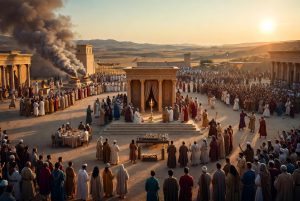
Leviticus 23 moves from sacrifices, priests, purity, and holiness into holy time. God did not only claim Israel’s altar. He claimed their calendar. The days, weeks, seasons, harvests, rest days, feasts, assemblies, and memorials were not left to Israel’s creativity. The Lord appointed them.
The chapter opens with “the LORD’s appointed times.” They were not Israel’s religious inventions. They were not cultural festivals later baptized with spiritual meaning. God set them apart. He commanded holy convocations. He marked time with worship so Israel would learn to remember, rest, rejoice, repent, and hope according to His word.
That is already a serious lesson. Human beings assume time belongs to them. We speak of “my week,” “my schedule,” “my plans,” “my season,” “my future.” Leviticus 23 tells Israel that time itself stands under God’s claim. The field belongs to Him, the altar belongs to Him, the body belongs to Him, and the calendar belongs to Him.
The first appointed rhythm is the Sabbath. Six days were for work, but the seventh day was a Sabbath of complete rest, a holy convocation. It was the Sabbath of the Lord in all their dwellings. Before the yearly feasts are listed, God places weekly holy time before Israel. Their work was not ultimate. Their productivity was not sovereign. Their bodies, homes, servants, fields, and communities had to yield to the command of God.
The Sabbath belonged to Israel under the Law of Moses. Christians must not drag the church back under Sabbath command as covenant law. The New Testament is clear that the old covenant has been fulfilled in Christ, and Christians are not to be judged with respect to a Sabbath day. But the Sabbath still teaches. It trained Israel to confess that life does not run on human labor alone. God rules time. God gives rest. God is not honored by people who work as though they are their own providers.
After the Sabbath, Leviticus 23 turns to Passover and the Feast of Unleavened Bread. In the first month, on the fourteenth day at twilight, Israel kept the Lord’s Passover. On the fifteenth day came the Feast of Unleavened Bread for seven days. The people were to eat unleavened bread, hold holy convocations, and present offerings by fire to the Lord.
Passover was not a vague celebration of freedom. It looked back to the night God delivered Israel from Egypt through blood, judgment, and mercy. Israel’s firstborn lived because God provided the way of deliverance. The blood on the doorposts did not flatter Israel’s goodness. It testified that salvation came by God’s provision.
Unleavened Bread continued the memory. Israel was to remove leaven and eat the bread of haste, the bread connected to departure from bondage. Redemption had to be remembered in the life of the nation. God did not want Israel to forget Egypt, forget blood, forget judgment, forget deliverance, or forget that they were a people rescued by His hand.
The New Testament brings this into Christ with force. Paul says, “For Christ our Passover also has been sacrificed” (1 Corinthians 5:7). That is not decorative language. Christ is the true Passover sacrifice. His blood delivers from a deeper bondage and a greater judgment. The exodus from Egypt was real, but it pointed forward to a greater redemption through the Lamb of God.
Paul also uses the imagery of unleavened bread to press holiness in the church. Because Christ our Passover has been sacrificed, the old leaven of malice and wickedness must not remain. The church must celebrate with sincerity and truth. Redemption by blood demands a cleansed life. Grace does not invite believers to keep Egypt in the pantry.
Leviticus 23 then moves to the first fruits. When Israel entered the land and reaped the harvest, they were to bring a sheaf of the first fruits to the priest. The priest waved it before the Lord for acceptance. They were not to eat bread, roasted grain, or new growth until the offering was brought. The first produce of the land belonged before the Lord.
This command taught dependence. Israel would live in houses they did not build and eat from land God gave. The first fruits offering trained them not to treat harvest as self-generated wealth. Before they consumed the harvest, they had to acknowledge the Giver.
The New Testament uses first fruits language for resurrection. Christ has been raised from the dead, “the first fruits of those who are asleep” (1 Corinthians 15:20). Israel’s first fruits anticipated more harvest to come. Christ’s resurrection guarantees the resurrection harvest of His people. His empty tomb is not an isolated miracle. It is the beginning of the final harvest.
Fifty days after the first fruits came the Feast of Weeks, later known as Pentecost. Israel brought a new grain offering to the Lord, including two loaves baked with leaven as first fruits to the Lord. Offerings were made, and the people held a holy convocation. Again, the harvest was not merely agricultural. It was theological. God gave increase, and His people answered with worship.
The New Testament significance of Pentecost is impossible to miss. In Acts 2, on the day of Pentecost, the gospel was preached after the resurrection and exaltation of Christ. Peter declared Jesus crucified, raised, and made both Lord and Christ. Those pierced to the heart were told to repent and be baptized for the forgiveness of sins. About three thousand souls were added that day.
Leviticus 23 did not explain Acts 2 in advance in every detail, but God’s calendar placed a feast of harvest in the life of Israel, and on that day the gospel began to gather a greater harvest. The risen Christ was preached. Forgiveness was proclaimed. The church was brought into visible existence. God’s appointed time became the setting for the announcement of redemption in Christ.
The chapter then gives instructions connected to the seventh month. The Feast of Trumpets came on the first day of the seventh month, a rest and holy convocation marked by trumpet blasts. The trumpets called Israel to attention before God. Sacred time was not background noise. The people had to stop, gather, and remember that they lived under the Lord’s summons.
Then came the Day of Atonement on the tenth day of the seventh month. Leviticus 16 gives the fuller ritual, but Leviticus 23 sets the day into the calendar. It was a day for humbling the soul, presenting offerings, and doing no work. Any person who did not humble himself would be cut off. Any person who did work would be destroyed from among the people.
The severity shows the weight of atonement. Israel could not treat the Day of Atonement like an optional religious event. Sin had to be dealt with. The people had to humble themselves. No ordinary work could compete with the seriousness of cleansing before God.
Christians do not keep the Day of Atonement as a covenant requirement. Christ has fulfilled it. Hebrews teaches that He entered the greater and more perfect tabernacle, not with the blood of goats and calves, but through His own blood, having obtained eternal redemption. The old day came once every year because the work was not final. Christ’s offering is once for all.
That means Christians should not rebuild the ritual. But Christians must not lose the reverence. If the shadow required humility, how much more should the substance humble us? The blood of Christ is not a casual doctrine. Atonement is not a slogan. The Son of God gave Himself to cleanse what animal blood could not reach.
After the Day of Atonement came the Feast of Booths, or Tabernacles. For seven days Israel lived in booths and rejoiced before the Lord. They took branches and celebrated after the harvest. The feast reminded them that God made the sons of Israel live in booths when He brought them out of Egypt. Their settled life in the land had to remember wilderness dependence.
That was a needed mercy. Prosperity has a way of making people forget tents. Full barns can make former slaves talk like self-made owners. The Feast of Booths made Israel remember that they had once lived in temporary shelters, carried by God’s mercy, fed by His hand, and led through the wilderness. Joy had to be tied to memory.
The feast also taught that worship includes rejoicing before God. Leviticus is not only blood, fire, warning, and prohibition. It includes commanded joy. But this joy was not careless entertainment. It was holy rejoicing. It remembered redemption, harvest, wilderness, and the Lord’s provision. God’s people were not left to invent joy; they were taught how to rejoice before Him.
Leviticus 23 ends by summarizing the appointed times. Moses declared them to the sons of Israel. God had ordered the sacred year. Every feast stood in relation to His authority, His redemption, His provision, His holiness, and His promises.
Christians should read this chapter with care. We are not under Israel’s festival calendar. The church is not commanded to keep Passover, Unleavened Bread, First Fruits, Weeks, Trumpets, Day of Atonement, or Booths as old covenant feasts. Paul warns against being judged by food, drink, festivals, new moons, or Sabbaths, because such things were shadows; the substance belongs to Christ.
But shadows are not meaningless. They taught Israel to live by God’s time, remember God’s redemption, depend on God’s provision, humble themselves before God’s atonement, and rejoice in God’s faithfulness. Christ does not make those truths smaller. He brings them into their intended fullness.
The Passover finds its fulfillment in Christ our sacrifice. The unleavened life finds its moral force in the church’s call to sincerity and truth. First fruits finds resurrection hope in Christ raised from the dead. Pentecost becomes the day the gospel harvest begins in power. Atonement finds its final answer in the blood of Jesus. Booths points the heart toward dependence, pilgrimage, and joy before God.
The chapter also challenges the modern abuse of time. Many Christians treat the calendar as though God only receives whatever space remains. Work gets priority. Sports get priority. Entertainment gets priority. Family traditions get priority. Rest is defined by pleasure. Worship is squeezed around convenience. Reflection is neglected. Thanksgiving is thin. Repentance is delayed. Hope is crowded out by busy living.
Leviticus 23 does not put Christians under Israel’s calendar, but it does expose the lie that time is morally neutral. Time reveals worship. A person’s calendar often tells the truth about his gods before his mouth does.
Under the New Covenant, the first day of the week becomes significant in the assembly of the church. Christians came together to break bread. The resurrection of Christ gives the Lord’s people a new redemptive center. The church does not keep the Sabbath as Moses commanded Israel, and it does not keep the feast calendar. But the worship of God still takes priority over human convenience. The Lord’s Day must not be treated as religious clutter.
Leviticus 23 also teaches families to remember. God built memory into Israel’s year because forgetfulness destroys faithfulness. Parents were to raise children who knew why these days mattered, why booths were built, why unleavened bread was eaten, why atonement required humility, why harvest was offered, and why God’s acts had to be rehearsed.
A generation without memory will become a generation without reverence. If children only inherit schedules, hobbies, devices, and entertainment, they will not accidentally grow into holy people. They must be taught the works of God, the meaning of worship, the cost of redemption, and the hope secured in Christ.
The Christian life needs holy memory. The Lord’s Supper gives the church a weekly remembrance of Christ’s body and blood. Scripture gives the church the record of God’s works. Prayer trains dependence. Singing teaches truth. Giving confesses stewardship. Assembly forms a people who do not drift alone. None of this is empty ritual when received by faith and practiced according to the word of God.
Leviticus 23 also gives a needed correction to joyless religion. The appointed times included rest and rejoicing. Holiness is not gloom. Reverence is not misery. God’s people should know how to rejoice, but their joy must be anchored in truth. The joy of God’s people is not built on denial, entertainment, or self-expression. It is built on redemption, provision, cleansing, resurrection, and hope.
This chapter finally presses hope. Israel’s calendar moved through work and rest, sacrifice and harvest, humility and joy. It trained the nation to live under God’s story instead of the world’s panic. Christians have a clearer view. Christ has died. Christ has risen. Christ reigns. Christ will return. Time is moving toward judgment and resurrection, not meaninglessness.
The holy days of Leviticus do not bind Christians as a calendar, but they do teach Christians to see time under God’s rule. Every week, every harvest, every meal, every assembly, every season, every remembered mercy, and every future hope belongs before Him.
God ordered Israel’s time because He owned Israel’s life. Christ now owns His people by His blood. The question is not whether Christians should keep Israel’s feast days. The question is whether redeemed people will let God rule their worship, their remembrance, their rest, their gratitude, their repentance, and their hope.
Questions for Reflection
- Why did God build worship, rest, memory, and harvest into Israel’s calendar?
- How does Leviticus 23 teach that time belongs under God’s authority?
- Which appointed time most clearly helps you understand Christ’s work?
- How does the New Testament help Christians honor the meaning of these feasts without returning to the Law of Moses?
- What does your calendar reveal about worship, remembrance, repentance, gratitude, and hope?
- How can families and congregations build stronger holy memory around God’s works in Christ?
Prayer
Holy Father, teach us to number our days under Your rule. Forgive us for treating time as though it belongs first to us. Thank You for the redemption, rest, atonement, resurrection, provision, and hope fulfilled in Jesus Christ. Train our hearts to remember what You have done, to worship with reverence, to rejoice with truth, and to live as people whose time is governed by Your word. Through Christ our Lord, amen.
Takeaway
God ordered Israel’s calendar around redemption, worship, rest, and hope, and Christ now calls His people to live all time under the rule of God.
---
Preach It
Holy Days and the Calendar of Redemption
Text: Leviticus 23 New Testament Tie-In: Colossians 2:16–17; 1 Corinthians 5:7–8; 1 Corinthians 15:20; Acts 2
Thesis
Leviticus 23 teaches that God owns time, worship, memory, harvest, rest, and hope, and Christ fulfills the appointed times toward which Israel’s calendar pointed.
Simple Sermon Outline
1. God Claimed Israel’s Time
The appointed times were the Lord’s, not Israel’s invention. God ordered the calendar around worship and remembrance.
2. God Taught Redemption Through Passover
Passover and Unleavened Bread reminded Israel of deliverance through blood. Christ is our Passover sacrifice.
3. God Taught Dependence Through Harvest
First Fruits and Weeks taught Israel that harvest came from God. Christ’s resurrection is the first fruits of those who sleep, and Pentecost became the day of gospel harvest.
4. God Taught Humility Through Atonement
The Day of Atonement required Israel to humble the soul. Christ fulfilled atonement through His own blood once for all.
5. God Taught Joy and Memory Through Booths
The Feast of Booths reminded Israel of wilderness dependence and commanded rejoicing before God.
Conclusion and Invitation
Christians are not under Israel’s feast calendar, but the appointed times point to truths fulfilled in Christ. God owns time, and redeemed people must not live as though their days belong to themselves.
Come to the Redeemer toward whom the shadows pointed. Hear the gospel. Believe in Christ. Repent of sin. Confess Him as Lord. Be baptized for the forgiveness of sins. Then live your days under the rule of the God who redeemed you.