Why Leviticus Is Not Dead Law for Dead Religion
Text: Leviticus 1–27 Series: Vayiqra — Called Near, Made Holy Theme: Leviticus is a seriously living text that demonstrates the active, unrelenting nature of God’s holiness and the total, daily devotion required to dwell in His presence. Christ Connection: Christ did not fulfill meaningless religious debris; He fulfilled the shadows, sacrifices, priesthood, and holiness categories that pointed forward to Him, becoming the living way for sinners to approach the Father.
The modern church has largely abandoned the Book of Leviticus, treating it as an ecclesiastical graveyard filled with the dry bones of obsolete rituals and irrelevant dietary codes. When believers stumble into its chapters during a yearly reading plan, they often perceive only the rigid, mechanical administration of a dead religion. This is a catastrophic misreading of the text. Leviticus is not an autopsy report; it is the violent, beating heart of God's covenant with Israel. From the opening call from the tent of meeting to the final regulations of vows, the book pulses with the terrifying necessaryity of a holy God dwelling among a sinful people. To dismiss Leviticus as dead law is to demonstrate a serious ignorance of both the severity of sin and the active, consuming nature of divine holiness. The God of Leviticus is not a static deity carved from stone; He is a consuming fire, and His law is an active force designed to govern the lives of a redeemed people.
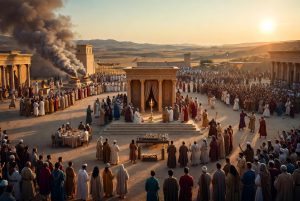
The sheer volume of blood in the opening chapters obliterates the concept of dead religion. The sacrificial system was a visceral, chaotic, and seriously living exchange. When an Israelite approached the bronze altar, he was not engaging in an empty, meditative ritual. He brought a living, breathing animal, placed his heavy hand upon its head to transfer his guilt, and slaughtered it. The life of the flesh is in the blood, and God decreed that life must be poured out on the altar to make atonement for the soul. The worshiper watched the life drain from his substitute. He smelled the burning fat and flesh ascending to heaven. This was not a religion of theoretical concepts; it was a religion anchored in the grim reality that sin produces death, and survival requires a substitute. The altar was the most active place in the camp, running continually to absorb the wrath of God and maintain the fellowship between heaven and earth.
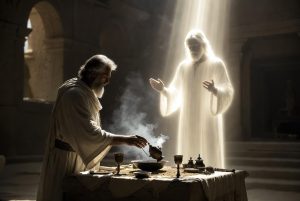
the priesthood established in Leviticus was not a class of idle bureaucrats managing a dead institution. Aaron and his sons stood on the razor's edge between the living God and a dying nation. They bore the names of the tribes on their shoulders and over their hearts. They were charged with the terrifying task of distinguishing between the holy and the common, the clean and the unclean. The narrative forcefully proves that this system was alive and lethal. When Nadab and Abihu treated the holy fire as a common utility, acting on their own presumption rather than God’s command, fire flashed from the presence of the Lord and consumed them. Dead idols do not strike down disobedient priests. Dead religion does not demand immediate execution for an unauthorized incense offering. The deaths of Aaron’s sons stand as a permanent monument to the fact that Yahweh is fiercely alive, and He will be treated as holy by those who draw near to Him.
Romans 15:4 gives the church the right way to read Leviticus: “whatever was written in earlier times was written for our instruction.” Paul does not put Christians back under the Law of Moses. He teaches that the earlier Scriptures still instruct, warn, and build hope. 2 Timothy 3:16–17 says all Scripture is inspired by God and profitable, which includes Leviticus. Galatians 3:23–25 explains the covenant boundary: the Law was a tutor leading to Christ, but now that faith has come, God’s people are no longer under that tutor. Leviticus is profitable Scripture, but it is not New Covenant law for the church.
Leviticus also shatters the illusion that faith is merely a matter of internal disposition. The extensive purity laws detailed in the middle of the book prove that God’s holiness aggressively invades the mundane realities of daily life. The law governed what the Israelites ate, how they managed their fields, how they dealt with mold in their houses, and how they handled bodily discharges. Holiness was not confined to the tabernacle courtyard; it was a living state of being that permeated the kitchen, the bedroom, and the marketplace. Israel had to remain constantly vigilant, making active, daily choices to remain pure so they would not defile the camp where the King resided. A dead religion stays safely inside a building on the Sabbath. The living God of Leviticus demands total jurisdiction over every square inch of human existence, every hour of the week.
The calendar of Israel, dictated in Leviticus 23, further demonstrates a faith that is active and moving. The appointed feasts—Passover, Unleavened Bread, Firstfruits, Pentecost, Trumpets, the Day of Atonement, and Booths—forced the nation to live within the rhythm of God’s redemptive history. These were not empty, nostalgic holidays. They were mandatory assemblies where the people actively rehearsed the mighty acts of God. They lived in temporary shelters to remember the wilderness. They afflicted their souls and rested from labor to acknowledge their desperate need for atonement. The calendar ensured that the memory of their deliverance and their dependence on God’s provision remained the organizing principle of their society. Time itself belonged to God, and He structured it to keep their faith active, expectant, and grounded in reality.
The Christian must reject the false dichotomy that pits the "dead law" of the Old Testament against the "living grace" of the New. The writer of Hebrews declares that the word of God—including the book of Leviticus—is living and active, sharper than any two-edged sword. Jesus Christ did not come to rescue us from a dead law; He came to fulfill a law that was entirely holy, righteous, and good, but which lacked the power to change the human heart. The blood of bulls and goats could never perfect the worshiper, but it perfectly pointed to the One who could. Christ is the living water, the living bread, and the living stone. He offered Himself through the eternal Spirit as a sacrifice to God, cleansing our consciences from dead works to serve the living God (Hebrews 9:14). Because He lives, and because His blood has secured eternal redemption, we are now commanded to present our bodies as a living and holy sacrifice, acceptable to God, which is our spiritual service of worship.
Questions for Reflection
- How does the violent reality of the sacrificial system challenge the modern idea that God simply ignores sin out of love?
- What do the deaths of Nadab and Abihu teach us about the danger of treating God’s commands with casual presumption?
- How do the daily purity laws of Leviticus demonstrate that God demands authority over our private, everyday lives, not just our public worship?
- How did the appointed feasts keep the nation of Israel actively anchored to the reality of God’s redemptive power and provision?
- Read Hebrews 9:11-14. How does the blood of Christ cleanse us from "dead works," and what does it mean to serve the living God?
Prayer
Almighty God, You are the living and true God, a consuming fire who demands absolute holiness from Your people. Forgive us when we treat Your commands as optional or reduce our faith to a casual, dead routine. Thank You for the Book of Leviticus, which reveals the terrifying reality of Your purity and the severe cost of our sin. We praise You for Jesus Christ, who offered Himself as the perfect, living sacrifice to cleanse our consciences and secure our redemption. Empower us to present our bodies daily as a living sacrifice, holy and acceptable to You. In the name of Jesus, Amen.
Takeaway
Leviticus proves that God is fiercely alive and demands total jurisdiction over our lives, a reality that drives us to the perfect, living sacrifice of Jesus Christ.
---
Preach It
Why Leviticus Is Not Dead Law for Dead Religion
Text: Leviticus 1–27 New Testament Tie-In: Hebrews 9:11–14; Romans 12:1–2; 1 Peter 1:14–16
Thesis
Leviticus exposes the illusion of casual religion. It shows that serving a holy God requires reverence, obedience, and surrendered life. Christ fulfills the covenant shadows, and His church must carry forward holiness through the New Covenant, not by returning to Moses.
Simple Sermon Outline
1. The Altar is Alive
People look at the opening chapters of Leviticus and see an archaic slaughterhouse. They call it a dead religion of the past. But there is nothing dead about the bronze altar. It was a place of violent, substitutionary life. The Israelite brought an unblemished animal and watched its blood pour out because sin requires a life. The altar teaches us that God does not negotiate with rebellion; He demands justice. To call this "dead law" is to show a severe misunderstanding of the wrath of God and the cost of forgiveness. True religion begins at the altar, where the innocent dies for the guilty.
2. The Danger is Real
A dead idol cannot hurt you. A dead religion makes no demands and enforces no penalties. Leviticus proves that Israel served the living God. When Nadab and Abihu brought unauthorized fire before the Lord, they were instantly consumed by fire from the sanctuary. God is not a safe, manageable accessory to your life. He is a consuming fire. He declares, "By those who come near Me I will be treated as holy." Leviticus warns us that we cannot invent our own ways of worship or presume upon the patience of God. He dictates the terms of our approach.
3. Holiness is Active
Leviticus refuses to let religion stay in the tabernacle. The middle chapters of the book are filled with laws about mildew, skin diseases, bodily fluids, and diet. God invaded their kitchens and their bedrooms. He forced them to constantly distinguish between the holy and the common. Holiness is not a passive state; it is an active, daily obedience. Israel could not sing praises to a holy God on the Sabbath and live like pagans the rest of the week. The living God demands total jurisdiction over every aspect of your behavior, your health, and your home.
4. The Living Sacrifice
The law was not dead, but it could not give life to dead sinners. It was a shadow pointing to the substance. Jesus Christ fulfilled the righteous requirements of Leviticus. He offered His own blood, through the eternal Spirit, to cleanse our consciences from dead works so that we might serve the living God. Because Christ has become our perfect High Priest and our ultimate sacrifice, Paul commands us in Romans 12 to present our bodies as a living and holy sacrifice. We do not bring bulls to an altar; we bring our entire lives in absolute submission to His authority.
Conclusion and Invitation
You cannot serve the living God with a dead, casual faith. He demands your whole heart, your whole mind, and your whole strength. The wages of your sin is death, but the blood of Jesus Christ offers you life. You must respond to His authority. Hear the truth of the gospel. Believe that Jesus is the Son of the living God. Repent of your sins and your dead works. Confess Him as Lord. Be baptized for the remission of your sins, rising from the water to walk in newness of life. Do not wait; come to the living Savior today.