The Five Offerings and the Shadow of the Cross
Text: Leviticus 1–7 Series: Vayiqra — Called Near, Made Holy Theme: The five Levitical offerings demonstrate that approaching a holy God requires absolute surrender, pure devotion, the shedding of blood for defilement, and precise restitution for guilt. Christ Connection: Jesus Christ perfectly fulfills the righteous demands of all five offerings, serving as our complete surrender, our spotless tribute, our peace, our purification, and our debt payment before the Father.
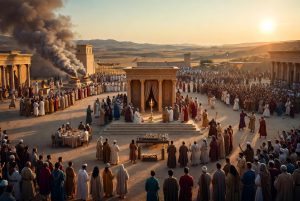
The altar of burnt offering stood immediately inside the gate of the tabernacle courtyard, enforcing a brutal and unavoidable reality: there is no access to the presence of God without death. Before an Israelite could sing psalms of praise, before the priests could burn incense in the holy place, and before the nation could claim the blessings of the covenant, the issue of sin had to be dealt with through the shedding of blood. Leviticus chapters 1 through 7 outline five distinct offerings—the burnt offering, the grain offering, the peace offering, the sin offering, and the guilt offering. God did not institute this complex system to burden His people with meaningless religious chores. He designed these sacrifices as a comprehensive theological vocabulary. Each offering addressed a specific aspect of the fracture between a holy Creator and a defiled humanity, meticulously training Israel to understand the mechanics of atonement and the exact nature of the substitute that would one day hang upon a Roman cross.
The foundational sacrifice was the burnt offering (Leviticus 1). This offering was entirely unique because it was wholly consumed by the fire on the altar. The worshiper brought an unblemished male animal, pressed his hand upon its head to signify identification and the transfer of guilt, and then slaughtered it. The priest splashed the blood against the altar, and the entire animal was burned. Nothing was kept for the priest or the worshiper; it was completely surrendered to God as a soothing aroma. The burnt offering represented general atonement, but more specifically, it symbolized absolute, unreserved consecration. It demonstrated that God demands and deserves the entirety of the worshiper’s life. Half-hearted devotion is rejected at the bronze altar. The burnt offering forcefully declares that to belong to God is to be entirely consumed by His holy will, holding nothing back for personal use or pride.
Accompanying the burnt offering was the grain offering (Leviticus 2). This was the only sacrifice of the five that did not involve the shedding of blood. It was a tribute, a voluntary presentation of fine flour, oil, and frankincense. God strictly commanded that no leaven or honey could be mixed with the grain offering, as both elements represented corruption and fermentation. Instead, it was to be seasoned with salt, the enduring symbol of the eternal covenant. A memorial portion was burned on the altar, and the remainder provided sustenance for the priests. The grain offering functioned as a tangible acknowledgment that God is the sovereign provider of all physical blessings and the rightful owner of the harvest. By bringing the pure, unleavened fruit of their labor, the Israelites dedicated their daily work, their wealth, and their physical strength to the King who gave them the land. It was a pledge of moral purity and steadfast loyalty.
The peace offering (Leviticus 3) was the centerpiece of covenant fellowship. While the burnt offering was entirely consumed by God, and the grain offering was shared with the priests, the peace offering was a communal meal. The fat and the internal organs—representing the richest and best parts—were burned on the altar for God. The priest received a specific portion, and the worshiper took the rest of the meat home to eat a joyful feast with his family and friends in the presence of the Lord. The peace offering was a celebration of reconciliation. It proved that once the blood had been shed and atonement had been made, peace was established between God and man. You cannot sit at the table of the King while you are still His enemy. The peace offering taught Israel that true, joyful communion with the Creator is the direct result of a blood-bought reconciliation.
When the law was violated, Israel turned to the sin offering (Leviticus 4). This sacrifice dealt specifically with the purification of the sanctuary from the defiling effects of unintentional sin. Sin is not merely a breaking of rules; it is a spiritual contaminant that pollutes the camp. Depending on who sinned—the high priest, the whole congregation, a leader, or a common person—the blood of the sin offering was applied to different areas of the tabernacle. It was smeared on the horns of the bronze altar, or brought inside and sprinkled before the veil, to mathematically reverse the pollution caused by the transgression. Most necessaryly, if the blood was brought into the holy place, the body of the animal could not be eaten; it had to be taken entirely outside the camp and burned in a clean place. The sin offering demonstrated that the defilement of rebellion is so severe that it must be violently extracted from the presence of God and judged outside the boundaries of the holy community.
Finally, the guilt offering (Leviticus 5-6) addressed sins that required specific restitution. If an Israelite defrauded his neighbor, lied about a pledge, or committed robbery, he could not simply say a prayer and move on. He had to bring an unblemished ram for a guilt offering to the Lord, but first, he had to make the offended party whole. The law demanded that he restore what was stolen and add a twenty percent penalty to it. The guilt offering proves that God cares deeply about human justice. You cannot claim to be right with heaven while you are intentionally defrauding your brother on earth. God demands that our repentance be proven by our willingness to make costly, practical restitution for the damage our sin has caused.
The Christian is not commanded to build a bronze altar. We do not bring bulls, goats, or fine flour to a physical temple, because these five offerings were architectural blueprints pointing directly to Jesus Christ. He is the true and final substance. He is the ultimate burnt offering, the only man who has ever lived a life of total, unblemished, and unreserved surrender to the will of the Father. He is the pure grain offering, the unleavened bread of life, without a trace of the corruption of sin. He is our peace offering, establishing an eternal fellowship between God and man, having made peace through the blood of His cross.
the writer of Hebrews explicitly connects Jesus to the sin offering. Because the bodies of those animals whose blood was brought into the sanctuary by the high priest were burned outside the camp, "Jesus also, that He might sanctify the people through His own blood, suffered outside the gate" (Hebrews 13:11-12). He bore our defilement in the place of absolute rejection so that we could be made clean. Finally, Christ is our guilt offering. The prophet Isaiah declared that the Suffering Servant would render Himself as a guilt offering (Isaiah 53:10). We owed a debt of treason to divine justice that we could never repay, no matter how much restitution we attempted. Jesus paid the debt in full, satisfying the wrath of God and canceling the certificate of debt that stood against us. The Levitical system is finished because the shadow has given way to the Savior.
Questions for Reflection
- How does the burnt offering’s requirement of total consumption challenge our tendency to offer God only a fraction of our lives and resources?
- The grain offering required pure, unleavened devotion. In what ways do we attempt to mix the "leaven" of worldly corruption into our service to God?
- How does the peace offering illustrate that joyful fellowship with God is only possible after atonement has been made?
- What does the requirement of a twenty percent penalty in the guilt offering teach us about the necessity of making things right with those we have wronged?
- Read Hebrews 13:10-13. How does understanding the Old Testament sin offering deepen your appreciation for Christ suffering "outside the gate"?
Prayer
Righteous Father, we stand in awe of Your uncompromising holiness and the meticulous provision You made for the atonement of sin. We recognize that our rebellion demands death, and that our defilement separates us from Your presence. We praise You with our whole hearts for Jesus Christ, who fulfilled every righteous requirement of the law on our behalf. Thank You that He was entirely consumed by Your will, that He bore our sin outside the camp, and that He paid the debt we owed. Grant us the grace to present our bodies as living sacrifices, wholly acceptable to You. In the name of Jesus, Amen.
Takeaway
Because Jesus Christ perfectly fulfilled the demands of every Levitical sacrifice, we now approach a holy God not with the blood of animals, but with the absolute confidence of a finished redemption.
---
Preach It
The Five Offerings and the Shadow of the Cross
Text: Leviticus 1–7 New Testament Tie-In: Hebrews 10:1–14; Hebrews 13:10–13; Ephesians 5:2
Thesis
God established the five Levitical offerings to teach Israel the precise cost of absolute devotion, purification, and restitution, all of which serve as a flawless shadow pointing to the finished, all-encompassing sacrifice of Jesus Christ.
Simple Sermon Outline
1. The Demand for Total Surrender
The sacrificial system begins with the burnt offering, and the defining characteristic of the burnt offering is that the entire animal goes up in smoke. Nothing is held back. God does not ask for a percentage of the animal; He demands the whole thing. This establishes the baseline for approaching the Creator. God is not interested in partial obedience or divided loyalties. The burnt offering teaches us that true worship requires absolute, unreserved surrender. You cannot claim to belong to God while keeping the best parts of your life, your time, and your wealth for yourself. He demands to be the consuming fire of your entire existence.
2. The Table of Reconciled Fellowship
The peace offering is the only sacrifice where the worshiper was allowed to sit down and eat a portion of the meat in the presence of God. It was a communal feast celebrating fellowship. But you must notice the order: you cannot have a peace offering without the shedding of blood. Fellowship with a holy God is impossible until the penalty of sin has been addressed. The world wants the peace of God without the blood of the cross. Leviticus proves that is a theological impossibility. Joyful communion at the table of the King is the exclusive privilege of those who have been reconciled by the altar.
3. The Requirement of Restitution
The guilt offering destroys the idea that you can be right with God while intentionally defrauding your neighbor. If an Israelite stole, lied, or cheated, he had to bring a ram to the priest, but first, he had to pay back what he stole plus a twenty percent penalty. Repentance is not just a private prayer; it is a public action. God demands justice in our human relationships. If your religion does not compel you to make restitution for the damage your sin has caused, your religion is worthless. We must be a people who make things right.
4. The Perfect Fulfillment in Christ
We do not live in Leviticus 1 through 7, because the shadow has been eclipsed by the Son of God. The writer of Hebrews tells us that the blood of bulls and goats could never take away sin. Jesus Christ is the fulfillment of every altar fire. He is our burnt offering, perfectly surrendered to the Father. He is our peace offering, making a way for us to commune with God. He is our sin offering, suffering outside the gate to purify us from defilement. He is our guilt offering, paying the infinite debt of our treason. He offered Himself once for all time, securing eternal redemption.
Conclusion and Invitation
The altar of the Old Covenant ran red with the blood of animals, yet it could only delay judgment. The cross of Jesus Christ provides total forgiveness. He was offered to bear the sins of many, but His sacrifice only applies to those who will submit to His authority. You cannot come to the Father on your own terms. Hear the gospel of Christ. Believe that He is the perfect sacrifice for your sin. Repent of your rebellion and your defilement. Confess His name before men. Be baptized for the remission of your sins, washed clean by the blood of the Lamb. Come to the cross today, and be reconciled to God.