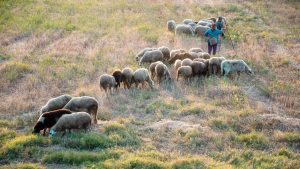
The Church Christ Purchased
Series: Under the Care of the Chief Shepherd Date: October 15, 2026 · PM Speaker: Ed Rangel Location: Niebla, Chile Text: Acts 20:28–32 Bible Version: English translation of the Spanish manuscript Sermon Type: Expository and doctrinal
Thesis
The church belongs to Christ, and He entrusted qualified elders to take care of His flock under the authority of His word.
Hook
Some congregations reach a difficult moment. They have men who seem to meet the biblical conditions. They know that the New Testament speaks of elders. However, when it comes time to appoint them, fear appears.
Someone thinks: 'If we appoint elders, we will no longer have a voice.' Another feels: 'We are handing over the church to them.' Another fears that a few men will rule over everyone.
But that way of thinking begins in the wrong place. The church is not ours to keep nor ours to hand over. Christ bought it with His own blood. The question is not: 'Which of us will retain control?' The question is: 'How does Christ want His church to be cared for?'.
Reading of the text
Acts 20:28–32
28. Be careful of yourselves and of the whole congregation, in the midst of which the Holy Spirit has made you overseers to shepherd the church of God, which He bought with His own blood.
29. I know that after my departure, fierce wolves will come among you who will not spare the flock.
30. Also from among yourselves some will arise speaking evil things to lead the disciples after them.
31. Therefore, be on guard, remembering that for three years, night and day, I did not cease to warn each one with tears.
32. Now I commend you to God and to the word of His grace, which is powerful to build you up and give you the inheritance among all the sanctified.
I. THE CHURCH HAS AN OWNER, AND THAT OWNER IS CHRIST
A. Paul calls it 'the church of God.'
It is not the preacher's church.
It is not the church of the founding families.
It is not the church of the majority.
It will not be the church of the elders either.
B. Christ paid the highest price.
Acts 20:28 says that He bought it "with His own blood."
Ownership is not decided by who put in more money, who has been around longer, who speaks louder, or who has more relatives.
The church belongs to the one who died for it.
C. Christ is the Head of the church.
Ephesians 1:22–23
22. And He put all things under His feet, and gave Him as head over all things to the church,
23. which is His body, the fullness of Him who fills all in all.
Colossians 1:18
18. He is also the head of the body, which is the church. He is the beginning, the firstborn from among the dead, so that He may have supremacy in all things.
A head directs the body.
If Christ is the Head, no member can say: 'The church must function the way I want.'
Nor can an elder say, “Here, what I say goes.”
We should all ask: 'What has Christ said?'.
D. Establishing elders does not hand the church over to men.
The church continues to belong to Christ before, during, and after the appointment.
Establishing biblical elders is accepting the order of the true Owner.
II. CHRIST ORDERED THAT THE FLOCK BE SHEPHERDED
A. The same men are called elders, bishops, and shepherds because of the function they perform.
- In Acts 20:17, Paul called the elders of Ephesus.
Acts 20:17
17. From Miletus he sent a message to Ephesus and called the elders of the church.
In Acts 20:28 he told them that the Holy Spirit had made them overseers.
He also commanded them to shepherd the church.
They are not three different positions. They are mature men who supervise and take care of the flock.
B. The eldership was not an idea born from culture.
Paul said that the Holy Spirit had made them overseers.
The Spirit revealed the conditions that had to be met.
A congregation recognizes that work when it examines men by the word of God.
C. The normal model includes saints, bishops, and deacons.
Philippians 1:1
1. Paul and Timothy, servants of Christ Jesus: To all the saints in Christ Jesus who are in Philippi, including the bishops and deacons.
The saints did not disappear when there were bishops.
The members continued being responsible disciples before God.
But now they had recognized men to watch over, teach, guide, and protect.
D. A biblical elder is not an owner, leader, or chieftain.
Shepherd what belongs to Christ.
Administer what someone else entrusted to you.
He serves under an authority that is not his own.
III. THE FLOCK NEEDS ROYAL PROTECTION
A. Paul did not speak about imaginary dangers.
He said that fierce wolves would come.
He said that some would rise even from within.
He said that they would try to drag disciples after them.
B. Danger does not always come with a dangerous appearance.
It can come in the form of false teaching.
It can come through a brother who wants followers.
It can come through a family that believes the congregation belongs to them.
It can come from a struggle for control disguised as spiritual concern.
C. The absence of elders does not eliminate human power.
When there is no recognized leadership, someone usually influences anyway.
The one who speaks the loudest, the one who controls the money, or the one who threatens to leave can rule.
That power is more difficult to correct because it does not have a defined mandate or recognized responsibility.
The biblical order brings leadership out of the shadows and places it under clear conditions.
D. Pastoral care is personal.
Paul reminded them that he had admonished “each one with tears.”
An elder does more than attend meetings and review accounts.
Know the sheep, see the danger, teach the truth, look for the weak, and weep for the souls.
John 10:11–15
11. I am the good shepherd; the good shepherd lays down His life for the sheep.
12. But the one who is a hired worker and not a shepherd, who is not the owner of the sheep, sees the wolf coming, abandons the sheep and flees, then the wolf seizes them and scatters them.
13. The wage earner flees because he only works for the pay and does not care about the sheep.
14. I am the good shepherd, and I know My sheep and they know Me,
15. just as the Father knows me and I know the Father, and I lay down My life for the sheep.
Jesus is the Good Shepherd and the perfect model.
The elders never replace Jesus.
His work is to reflect His care and lead the sheep to Him.
IV. THE ELDERS ARE ALSO UNDER AUTHORITY
A. Paul entrusted them to God.
He did not entrust them to his own wisdom.
He did not give them permission to invent doctrine.
They need to depend on God as much as any other member.
B. Paul entrusted them to the word of God's grace.
The word builds.
The word corrects.
The word establishes the limits of leadership.
If an elder contradicts the word, the word has the final say.
C. Elders must watch over themselves.
Before saying 'take care of the flock,' Paul said: 'Take care of yourselves.'
A position does not make anyone immune to pride, sin, or error.
A man who does not accept correction is not prepared to take care of others.
They will answer to the Chief Shepherd.
1 Peter 5:1–4
1. Therefore, I exhort the elders among you, I who am elder with them and a witness of the sufferings of Christ, and also a partaker of the glory that is to be revealed:
2. Shepherd the flock of God among you, watching over it, not by obligation, but voluntarily, as God wants; not for the greed of money, but with sincere desire;
3. not lording it over those entrusted to them, but being examples to the flock.
4. And when the Chief Shepherd appears, you will receive the unfading crown of glory.
They should not lord over others.
They must be examples.
The flock was entrusted to them, not given as a gift.
Christ remains the Chief Shepherd.
V. WHAT SHOULD WE REALLY DELIVER?
A. We must not give our conscience to any man.
Every Christian must know the word.
Every Christian must obey God rather than men.
B. Yes, we must give up our desire to control.
We must give up the imaginary right to have the last word in everything.
We must leave the habit of accepting direction only when it matches our preference.
We must leave behind the fear that suspects every leadership before it has done anything wrong.
C. The entire congregation must submit to Christ.
The elders submit to Christ in shepherding according to His word.
The members submit to Christ by recognizing and cooperating with qualified elders.
This way no one gains the church and no one loses it. Christ remains the Owner.
Conclusion
The main problem is not whether we like the idea of having elders. The issue is whether we accept that the church belongs to Christ.
Christ bought this church with His blood. Christ is the Head. Christ knows the dangers of the flock. Christ revealed conditions for the men who must take care of it. Christ forbids them to lord over it. Christ commands the flock to recognize faithful care.
That is why establishing qualified elders is not giving away the church. It is allowing the church to be cared for in the way its Owner commanded.
Invitation
Before talking about our relationship with the elders, each one must examine his relationship with Christ. He purchased the church by giving His life for our sins. We must believe in Him, repent, confess Him as Lord, and be baptized for the forgiveness of our sins.
Romans 10:9–10
9. That if you confess with your mouth Jesus as Lord, and believe in your heart that God raised Him from the dead, you will be saved.
10. For with the heart one believes unto righteousness, and with the mouth one confesses unto salvation.
Acts 2:38
38. Then Peter said to them, "Repent and be baptized, each one of you, in the name of Jesus Christ for the forgiveness of your sins, and you will receive the gift of the Holy Spirit."
If you do not yet belong to Christ, come to Him. If you are already a Christian, but have sought control, have resisted His word, or have caused division, return to the Lord with a humble heart. The church belongs to Christ. We too must be completely His.