Does the Bible Authorize Women to Preach Publicly?
This question is often framed as a cultural debate, but it is not fundamentally cultural. It is biblical. The issue is not what modern society prefers. The issue is what Scripture authorizes.
The New Testament clearly affirms the dignity, intelligence, and indispensable service of women in the kingdom of God. Women prayed (Acts 1:14). Women prophesied (Acts 21:9). Women taught other women and children (Titus 2:3–5; 2 Timothy 1:5). Women labored alongside Paul in the gospel (Philippians 4:3). Scripture does not minimize their role.
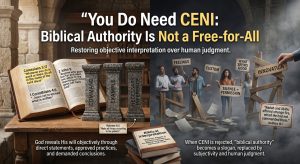
But when it comes to authoritative public teaching over men in the assembled church, the apostolic instruction is direct. Paul wrote, “I do not allow a woman to teach or exercise authority over a man, but to remain quiet” (1 Timothy 2:12, NASB 1995).
That statement is not rooted in local custom. Paul grounds it in creation order: “For it was Adam who was first created, and then Eve” (1 Timothy 2:13). The reasoning precedes culture. It goes back to Genesis.
Similarly, in 1 Corinthians 14:34–35, women are instructed to remain silent in the churches in the context of authoritative assembly order. Whatever interpretive challenges are discussed, the text unmistakably places limitations on public authoritative teaching roles.
This is not about ability. Many women are gifted communicators. Many are more articulate than men. Ability, however, does not determine authorization. Authority belongs to Christ, and Christ has revealed His will through the apostles.
The modern objection usually sounds like this: “But that was then.” Yet the text does not tie the command to Roman politics, education levels, or social pressures. It ties it to creation and order.
Submission to this teaching is not a concession to inferiority. It is recognition of divine structure. Within the Godhead, the Son submits to the Father (1 Corinthians 11:3), yet the Son is not inferior in nature. Role distinction does not equal value distinction.
The church is not free to rearrange roles based on cultural pressure. When the church modifies biblical structure to match contemporary sensibilities, it moves beyond Scripture.
Faithfulness requires restraint. It requires honoring what God has revealed, even when society criticizes it.
Women serve powerfully in teaching other women, training children, encouraging families, evangelizing personally, writing, counseling, and strengthening the body in countless ways. The New Testament envisions active, faithful women contributing meaningfully to the work of the church.
But it also establishes boundaries.
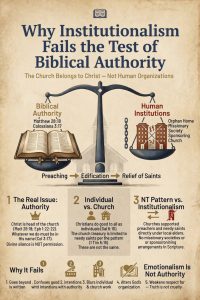
The real question is not whether culture approves. It is whether Scripture authorizes.
If Christ is Lord, then His revealed pattern governs practice.