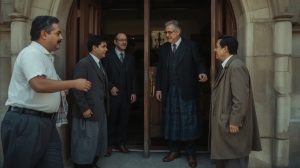
Quick to Hear, Slow to Speak
Text: James 1:19–21 Series: Living the Word: Faith in Action (James) Date: August 2, 2026 Speaker: Ed Rangel Location: Waupaca Church of Christ Bible Version: NASB 1995 Sermon Type: Expository
Learning Objectives
By the end of this sermon, the hearer should be able to:
- State the three commands of James 1:19 in order and explain why the order matters.
- Explain why the anger of man cannot achieve the righteousness of God, according to James 1:20.
- Distinguish the spiritual discipline of listening from passive silence, and explain what makes listening an act of faith.
- Identify the situation this week most likely to provoke a quick, angry response — and commit to the opposite posture.
Thesis
Quick listening, slow speaking, and slow anger are not personality traits but spiritual disciplines, and the person who practices them reveals that the saving word has been received and is bearing fruit.
James 1:19 gives three commands that describe the posture of a mature disciple. Every one of them runs against human instinct. We are quick to speak, quick to be angry, and slow to hear. The order James commands is the reversal of the order our flesh prefers. And the explanation is not psychological — it is theological. The anger of man does not achieve the righteousness of God. The flesh, given full expression in the first response, will not produce what God requires. The discipline James describes is the discipline of a person who has received the implanted word and is allowing it to govern even the first moment of a hard conversation.
Hook
A great deal of damage is done before anyone thinks to call it sin. A word is spoken too quickly. Anger rises too easily. A brother is answered before he is heard. Then everyone acts surprised when the conversation catches fire.
James does not begin with complicated counsel. He gives three commands every Christian can understand and every Christian has violated: be quick to hear, slow to speak, slow to anger. The problem is not that the command is hard to explain. The problem is that the tongue and the temper do not like being governed by the word of God.
Introduction
- James 1:19 opens with a connection to what precedes: "This you know, my beloved brethren."
- The truth he is about to state is not new information. They know it.
- The problem James addresses throughout the letter is not ignorance — it is the gap between knowing and doing.
- "But everyone must be quick to hear, slow to speak and slow to anger" (James 1:19).
- Three commands. Three reversals of natural instinct.
- The word "quick" (tachys) means swift, ready, prompt — the posture of an eager listener.
- The word "slow" (bradys) means deliberate, measured, unhurried — the opposite of impulsive.
- Together they describe a person whose first move in any encounter is toward the other, not toward the self.
I. Quick to Hear (James 1:19a)
A. Listening is commanded, not suggested.
- "This you know, my beloved brethren. But everyone must be quick to hear, slow to speak and slow to anger" (James 1:19) — the verb is imperative; the subject is universal.
- This is not advice for the naturally patient. It is a command for every Christian.
- The discipline of listening is the first act of humility in any conversation.
- The word tachys — quick, swift — implies readiness and eagerness.
- The quick listener is already leaning toward the other person before they begin.
- He has not already decided what he will say while the other person is still speaking.
B. Hearing extends beyond listening to other people.
- "Therefore, putting aside all filthiness and all that remains of wickedness, in humility receive the word implanted, which is able to save your souls" (James 1:21).
- The context of this command in James 1:18–21 is hearing the word — the word implanted is what saves the soul, but only when received in humility.
- The quick hearer is the one who comes to the word — whether preached, read, or spoken by a brother — without already having decided the outcome.
- A congregation of quick hearers is a congregation that can still be taught.
- The slow hearer has already arrived at his position before the word is opened.
- The quick hearer is still teachable when the service ends.
II. Slow to Speak (James 1:19b)
A. Measured speech is a discipline of the whole person.
- "Slow to speak" — bradys eis to lalēsai — deliberate, measured, unhurried before speaking.
- The slow speaker is not a person without words; he is a person whose words have been weighed before release.
- The damage the tongue does (James 3:5–6) happens at the speed of the unguarded first word.
- The discipline of being slow to speak guards against the sins of the tongue.
- Slander, gossip, impulsive correction, the careless word that cannot be retrieved.
- All of these require the first word to get out before the thought is complete.
B. Slow speech requires the prior discipline of quick hearing.
- The person who listens first has more information before he speaks.
- He has heard what was actually said rather than what he assumed would be said.
- His response is shaped by the actual conversation, not the imagined one.
- The Christian whose first posture is listening will speak fewer unnecessary words and fewer harmful ones.
III. Slow to Anger (James 1:19c–20)
A. Anger is not forbidden — the pace of anger is what James addresses.
- "Slow to anger" — bradys eis orgēn — deliberate, measured, unhurried before anger rises.
- The word orgē is deep-seated resentment or indignation, not only momentary irritation.
- James does not say never be angry. He says be slow — be deliberate — before anger settles in.
- The reason the pace of anger matters is theological.
- "For the anger of man does not achieve the righteousness of God" (James 1:20).
- Orgē anthrōpou — human anger — is driven by the desire to protect the self, to punish the offense, to win.
- That desire, given full expression in the first moment of anger, will not produce what God requires in the situation.
B. The flesh at full speed produces flesh-speed results.
- You cannot bully a brother into obedience. You cannot shame a family member into godliness.
- Human anger may force compliance; it cannot produce righteousness.
- The goal of faith — right relationship, genuine change, real peace — requires the pace James commands.
- The person who is slow to anger is the person who has delayed long enough for the word to govern the response.
- The anger that rises after prayer and patient reflection is a different thing from the anger that comes before the sentence is finished.
- James is not asking for the suppression of righteous concern. He is asking for the discipline that allows the concern to be expressed in the way God's righteousness requires.
Application
For the individual: Identify the person or situation that most consistently produces a quick-to-speak, quick-to-anger response in you. It may be a conversation with a spouse, a conflict at work, a pattern in the assembly. James's command applies precisely there. Practice the reversal: listen before you respond, speak only after you have heard fully, and delay anger long enough to ask whether your response will achieve what God requires — or just what you want.
For the church: A congregation of people who are quick to hear and slow to speak will handle disagreement differently than one where everyone arrives at a discussion already convinced and ready to speak. The quality of corporate decision-making, the outcome of conflict, the depth of fellowship — all of these are shaped by whether the people in the room are practicing James 1:19. The three commands are not just individual disciplines; they are congregational postures.
For parents and the next generation: Children learn the pace of anger and speech by watching adults. The parent who hears before speaking, who waits before responding in anger, who models the discipline James describes — is teaching a life skill that will serve their children in every relationship they ever have. The parent whose first move in conflict is always the quick word and the quick anger is teaching the opposite. What are your children inheriting from the way you handle the first moment of difficulty?
Conclusion
- Three commands: quick to hear, slow to speak, slow to anger.
- Three reversals of what the flesh prefers.
- The discipline is not natural — it is cultivated.
- The cultivation begins with receiving the implanted word in humility (James 1:21).
- The word that has taken root changes the pace of the first response.
- The anger of man does not achieve the righteousness of God.
- But the measured, listening, slow-to-respond person can.
- Not because he is naturally patient.
- But because the word has been at work in him long enough to slow the first instinct.
- Quick to hear. Slow to speak. Slow to anger. This is what faith looks like in the first moment of a hard conversation.
Invitation
If your conversations are consistently marked by quick speech, quick anger, and slow listening — James says the word has not yet fully taken root. The implanted word produces this discipline when it is received in humility and allowed to govern the whole person. The gospel that saves is the word that changes the pace of the angry response. Hear the word. Believe that Jesus is the Christ. Repent of the quick tongue and the quick anger. Confess His name. Be baptized for the remission of your sins. Then come to every conversation with the readiness to hear — and the discipline to be slow.
Word Study
| Word | Original | Meaning | Use in Text |
|---|---|---|---|
| Quick | ταχύς (tachys) | Swift, ready, prompt | James 1:19 — the required posture toward hearing: eager, not reluctant |
| Slow | βραδύς (bradys) | Deliberate, measured, unhurried | James 1:19 — the required pace for both speaking and anger |
| Anger | ὀργή (orgē) | Deep-seated resentment or indignation; not mere irritation | James 1:19–20 — the emotional state that, at full speed, produces what God does not require |
| Righteousness of God | δικαιοσύνην θεοῦ (dikaiosynēn theou) | The right conduct, relationship, and standing that God requires | James 1:20 — the goal human anger cannot produce |
| Implanted | ἔμφυτος (emphytos) | Naturally rooted, inherent; planted within | James 1:21 — the word received in humility takes root and bears the fruit James describes |
Scripture Interlock Table
| Testament | Reference | Original Context | Connection to Main Text | Doctrinal Use | Sermon / Teaching Use |
|---|---|---|---|---|---|
| OT | Proverbs 15:1 | A soft answer turns away wrath, but a harsh word stirs up anger | Provides the OT practical parallel to James 1:19 — the slow speaker produces different results than the quick one | Measured speech in the moment of conflict produces peace; harsh, quick speech produces escalation | Bridges to the PM text and reinforces Point II: the slow speaker is the wise speaker |
| OT | Proverbs 10:19 | When there are many words, sin is not lacking; he who restrains his lips is wise | The OT wisdom tradition confirms James's command about slow speech | The quantity of words increases the risk of sin; wisdom restrains rather than releases | Reinforces Point II: being slow to speak is the wisdom of the OT Proverbs also |
| NT | James 3:5–6 | The tongue is a fire, set on fire by hell | The natural consequence of quick speech is the damage the tongue inflicts | The tongue at full speed produces the worst results; the disciplined tongue prevents them | Connects AM 08-02 to AM 08-09 — the same tongue that needs to be slow is the tongue that becomes a fire |
| NT | Ephesians 4:26–27 | "Be angry and yet do not sin; do not let the sun go down on your anger" | Paul acknowledges anger while commanding its governance — consistent with James's "slow to anger" | Anger itself is not sin; uncontrolled, prolonged anger is | Reinforces Point III: the issue is not the emotion but its pace and expression |
| NT | James 1:21 | Receive the implanted word in humility, which is able to save your souls | The word that saves is the word that, when received in humility, produces the disciplines James commands | The implanted word changes the character of the person, including the pace of the response in conflict | Grounds the whole passage: the three commands are the fruit of the word that has taken root |