What All Will Happen on the Day of Judgment?
Learning Objectives
Explain why the Day of Judgment is certain and not optional, imaginary, or avoidable.
Show that heaven and earth will pass away when the Lord returns.
Demonstrate from Scripture that all the dead will be raised.
Explain that every person will stand before Christ to be judged.
Identify the standard of judgment: the word of Christ, our deeds, our words, and even secret things.
Urge every hearer to prepare for judgment through obedient faith in Christ.
Thesis
The Day of Judgment is certain, universal, final, and righteous; on that day the present world will pass away, all the dead will be raised, every person will stand before Christ, and each soul will receive either eternal joy or eternal punishment.
Introduction.
The Day of Judgment is the greatest event in the history of mankind still to come.
Creation was great.
The flood was great.
The giving of the law was great.
The cross was great.
The resurrection was great.
But the Day of Judgment will gather every soul before the throne of Christ.
Men may ignore that day, but they cannot avoid it.
A man may refuse to think about judgment.
A man may mock the idea of judgment.
A man may live as though judgment will never come.
But disbelief does not cancel divine appointment.
Hebrews 9:27 teaches that death and judgment are appointed.
Men die once.
After death comes judgment.
That is not speculation.
That is not preacher imagination.
That is the word of God.
Judgment is not something that might happen.
It is not something that could happen.
It is something that will happen.
God has fixed the day.
Acts 17:31 teaches that God has appointed a day in which He will judge the world in righteousness through Christ.
The Judge has been appointed.
The day has been appointed.
The proof has been given through the resurrection of Jesus from the dead.
The question is not whether the Day of Judgment will come.
It will.
The question is whether we are ready.
What all will happen on that day?
I. The Day of Judgment Is Certain.
God has appointed judgment.
Hebrews 9:27 teaches that men die once and then face judgment.
Death is not the end of existence.
Death is not escape.
Death is not the final word.
Judgment follows death.
Man leaves this life.
Man enters the unseen realm.
Man awaits the final judgment of God.
This appointment cannot be canceled by man.
Wealth cannot cancel it.
Education cannot cancel it.
Religion without obedience cannot cancel it.
Denial cannot cancel it.
God has fixed a day.
Acts 17:31 says God has fixed a day.
The day is not uncertain to God.
The day is not accidental.
The day is not dependent on human approval.
That day will be a righteous judgment.
God will not judge corruptly.
God will not judge ignorantly.
God will not judge unfairly.
The Judge is the risen Christ.
God will judge the world through the Man He appointed.
The resurrection is proof that Jesus is that appointed Judge.
The One men crucified is the One before whom men will stand.
The certainty of judgment should sober every soul.
Life is temporary.
Our bodies are temporary.
Our possessions are temporary.
Our opportunities are temporary.
Judgment is coming.
For the righteous.
For the wicked.
For the religious.
For the irreligious.
For the living.
For the dead.
No one will miss that appointment.
Not kings.
Not presidents.
Not preachers.
Not elders.
Not parents.
Not children.
Not you.
Not me.
II. Heaven and Earth Will Pass Away.
The present creation will not continue forever.
Second Peter 3:10 teaches that the day of the Lord will come like a thief.
It will come suddenly.
It will come unexpectedly to the unprepared.
It will come whether men are watching or not.
Peter says the heavens will pass away with a roar.
The material heavens will be shaken.
The universe as we know it will not remain.
The present order will be brought to an end.
Peter says the elements will be destroyed with intense heat.
The basic materials of this world will not survive the judgment fire.
The physical world will be dissolved.
God will end the present creation by His power.
The earth and its works will be exposed and burned up.
Man builds as though this world is permanent.
Houses.
Cities.
Monuments.
Empires.
Careers.
Bank accounts.
Peter teaches that the earth and its works will be burned up.
The things men worship will not last.
The things men sell their souls for will not last.
The things men choose over God will not last.
That should change the way we live.
Do not build your hope on a world God has already promised to destroy.
Do not trade your soul for temporary things.
Do not live for what cannot survive the Day of Judgment.
Jesus taught that heaven and earth will pass away.
Matthew 24:35 teaches that heaven and earth will pass away.
The physical creation is not eternal.
The present world is not permanent.
God has already announced its end.
But Jesus said His words will not pass away.
The world will pass.
The word of Christ will remain.
The word you ignore now will still stand when the world burns.
That means Scripture is more permanent than the universe.
Men treat the Bible as optional.
Men treat God’s commands as negotiable.
Men treat doctrine as opinion.
But Christ’s words will outlast heaven and earth.
On that day, life as we know it will cease.
There will be no more ordinary schedules.
No more workday.
No more weekend plans.
No more postponing obedience.
No more saying, “Later.”
There will be no more earthly security.
No hiding place.
No earthly defense.
No excuse strong enough to stand.
The present world will be finished.
The fire will come.
The heavens will pass.
The earth will be burned up.
The judgment will begin.
III. All the Dead Will Be Raised.
Jesus taught a universal resurrection.
John 5:28–29 teaches that an hour is coming when all who are in the tombs will hear His voice.
Not some.
Not only the righteous.
Not only the wicked.
All who are in the tombs.
The dead will come forth.
Death will not keep them.
Graves will not hold them.
The voice of Christ will call them.
There will be two outcomes.
Those who did good will come to a resurrection of life.
Those who practiced evil will come to a resurrection of judgment.
One resurrection leads to joy.
The other leads to condemnation.
Death does not erase the soul.
When a person dies physically, he does not cease to exist.
The body dies.
The spirit continues.
The soul awaits final judgment.
Luke 16 shows conscious existence after death.
The righteous are comforted.
The wicked are tormented.
The great separation is real.
The intermediate state is not the final judgment.
Hades is not the final lake of fire.
Paradise is not the final resurrection state.
The final judgment still awaits.
The resurrection prepares all men to stand before the Judge.
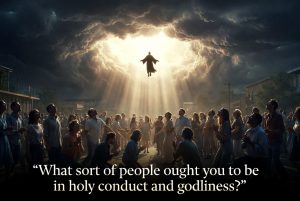
The dead will be raised to appear before Christ.
The righteous will be raised.
The wicked will be raised.
The forgotten will be raised.
The famous will be raised.
Romans 14:10 teaches that all will stand before the judgment seat of God.
No one will be absent.
No one will be overlooked.
No one will be excused from appearing.
Second Corinthians 5:10 teaches that all must appear before the judgment seat of Christ.
Each one will be recompensed.
Each one will answer for what was done in the body.
The judgment will include good and bad.
The resurrection destroys false comfort.
Some say death ends everything.
Jesus says the dead will hear His voice.
Jesus says the dead will come forth.
Jesus says judgment follows.
Some say God will not judge.
Scripture says He will.
Scripture says He has fixed the day.
Scripture says the Judge is appointed.
Some say only the wicked need to think about judgment.
All will stand before Christ.
Christians must also live soberly.
Judgment should shape every life.
IV. Judgment Will Be Rendered to Everyone.
Everyone will stand before Christ.
Acts 17:31 says God will judge the world.
Not one nation only.
Not one generation only.
The world.
Christ is the appointed Judge.
He is not merely a teacher to be admired.
He is not merely a Savior to be discussed.
He is Lord and Judge.
His judgment will be righteous.
No corruption.
No bribery.
No favoritism.
No mistake.
The word of Christ will be the standard.
John 12:48 teaches that the one who rejects Christ and does not receive His sayings has a judge.
That judge is not human opinion.
That judge is not denominational tradition.
That judge is the word Christ spoke.
The word will judge at the last day.
The sermon you rejected will rise in judgment.
The Bible class you ignored will rise in judgment.
The invitation you refused will rise in judgment.
The command you excused will rise in judgment.
Christ’s word is not temporary advice.
It is divine authority.
It is binding truth.
It is the standard by which we will be judged.
Each person will be judged according to deeds.
Romans 2:6 teaches that God will render to each one according to his deeds.
God sees what men do.
God remembers what men do.
God will judge what men do.
Second Corinthians 5:10 teaches that each one will receive according to what he has done in the body.
Good will not be forgotten.
Evil will not be hidden.
Every life will be opened before Christ.
This does not teach salvation by human merit.
No man earns salvation.
No man saves himself by perfect works.
But grace does not remove accountability.
Faith that obeys matters.
Each person will be judged according to words.
Matthew 12:36–37 teaches that men will give account for every careless word.
Words matter.
Speech reveals the heart.
God hears what men say.
By words men will be justified or condemned.
Lies will be judged.
Blasphemy will be judged.
Gossip will be judged.
Cruel speech will be judged.
False teaching will be judged.
This should sober the tongue.
What we say at home matters.
What we say online matters.
What we say about brethren matters.
What we say about God matters.
Even secret things will be judged.
Ecclesiastes 12:14 teaches that God will bring every act to judgment.
Every hidden thing.
Whether good or evil.
Nothing is truly secret from God.
Men hide from other men.
They hide motives.
They hide lust.
They hide dishonesty.
They hide bitterness.
They hide hypocrisy.
But no one hides from God.
He sees the heart.
He knows the facts.
He will judge righteously.
V. The Judgment Will Divide All People.
The Day of Judgment will be a day of unspeakable joy for the saved.
Matthew 25 pictures the Son of Man coming in glory.
The angels are with Him.
He sits on His glorious throne.
All nations are gathered before Him.
The righteous are placed at His right hand.
The right hand is the place of blessing.
The right hand is the place of acceptance.
The right hand is the place of joy.
The King will welcome them.
They are blessed of the Father.
They inherit the kingdom prepared from the foundation of the world.
Their hope becomes sight.
The Day of Judgment will be a day of unimaginable horror for the lost.
The wicked are placed on the left.
Not because Christ is confused.
Not because He lacks mercy.
Because judgment is righteous.
They will hear words more horrifying than any words ever spoken on earth.
“Depart from Me.”
“Accursed ones.”
“Into the eternal fire.”
“Prepared for the devil and his angels.”
That is not preacher scare tactic.
That is the teaching of Jesus.
That is the warning of the King.
That is what lost people face if they remain outside His grace.
The division will be final.
There will be no changing sides after judgment.
No second chance after the verdict.
No appeal to a higher court.
No hiding behind excuses.
The righteous enter eternal life.
Not temporary joy.
Not temporary relief.
Eternal life.
The wicked enter eternal punishment.
Not temporary inconvenience.
Not symbolic discomfort.
Eternal punishment.
Everyone will be present.
Those alive at the coming of Christ will be gathered.
First Thessalonians 4 teaches that the living saints will be caught up to meet the Lord.
The living will not escape the event.
The living will be gathered with the resurrected.
Those who have died will be raised.
John 5 teaches that all in the tombs will hear His voice.
The righteous dead will be raised.
The wicked dead will be raised.
Every person will face the Lord.
Adam’s race will be gathered.
No generation will be missing.
No sinner will be forgotten.
No saint will be overlooked.
VI. The Day of Judgment Demands Preparation Now.
You must not wait for that day to get ready.
Judgment day is not preparation day.
It is verdict day.
It is separation day.
It is recompense day.
Today is the time to prepare.
While you can still hear.
While you can still repent.
While you can still obey.
Delay is dangerous.
Death may come first.
The Lord may come first.
Your heart may harden further.
You must receive the words of Christ now.
John 12:48 warns that rejecting His sayings will condemn a man at the last day.
Do not reject His word now.
Do not argue with His commands now.
Do not pretend His authority does not matter now.
The word that saves is the word that will judge.
The gospel calls men to salvation.
The same truth will expose those who refused it.
Mercy rejected becomes testimony against the sinner.
The wise man hears and acts.
Hearing alone is not enough.
Agreement alone is not enough.
Obedient faith is required.
You must obey the gospel.
Christ died for sinners.
He bore the cross.
He shed His blood.
He opened the way to forgiveness.
Christ rose from the dead.
The resurrection proves His identity.
The resurrection proves His victory.
The resurrection proves He is the appointed Judge.
Christ commands all men to repent.
Acts 17 does not end with philosophy.
It announces judgment.
It calls men to turn to God.
The gospel must be obeyed.
Hear the word.
Believe Christ.
Repent of sin.
Confess Christ.
Be baptized for the forgiveness of sins.
Live faithfully.
Christians must also live ready.
Judgment begins with accountability.
Christians are not free to live carelessly.
Christians are not free to hide sin.
Christians are not free to despise the Lord’s word.
We must watch our deeds.
What we do matters.
How we serve matters.
How we treat others matters.
We must watch our words.
The tongue will be judged.
Careless words will be judged.
False words will be judged.
We must watch our secret life.
God sees what men do not see.
God knows what men cannot prove.
God will bring hidden things to light.
Application.
For the unbeliever.
Judgment is coming whether you believe it or not.
The resurrection of Jesus is God’s proof.
You need to obey the gospel now.
For the careless Christian.
Do not treat grace as permission to drift.
Do not live as though Christ will not judge His people.
Repent and return to faithfulness.
For the hypocrite.
Secret sin is not secret from God.
Religious appearances will not fool Christ.
The Judge knows the heart.
For the worldly-minded.
The heavens and earth will pass away.
The earth and its works will be burned up.
Stop living for what God has promised to destroy.
For the fearful but faithful.
Judgment will not only expose evil.
It will also vindicate the righteous.
The right hand of the King will be unspeakable joy.
For every soul.
You will be there.
You will stand before Christ.
You will hear the verdict.
Prepare now.
Conclusion.
The Day of Judgment is coming.
It is certain.
It is appointed.
It is unavoidable.
On that day, heaven and earth will pass away.
The present world will be destroyed.
The elements will be dissolved.
The earth and its works will be burned up.
On that day, all the dead will be raised.
The righteous.
The wicked.
All who are in the tombs.
On that day, everyone will stand before Christ.
The living.
The dead.
The powerful.
The poor.
The religious.
The rebellious.
On that day, judgment will be rendered.
According to the word of Christ.
According to deeds.
According to words.
According to secret things.
On that day, mankind will be divided.
Right hand or left hand.
Eternal life or eternal punishment.
Joy or horror.
Friend, are you ready to be judged?
The Day of Judgment is coming.
You will be there.
The question is whether you will be on the right hand or the left hand of the Lord.
Invitation.
Hear the word.
Romans 10:17 says faith comes from hearing, and hearing by the word of Christ.
Believe Christ.
John 8:24 warns that unless you believe that Jesus is He, you will die in your sins.
Repent.
Acts 17:30 says God commands all people everywhere to repent.
Confess Christ.
Romans 10:9–10 teaches confession with the mouth and belief in the heart.
Be baptized for the remission of sins.
Acts 2:38 commands repentance and baptism in the name of Jesus Christ for the forgiveness of sins.
Live faithfully.
Revelation 2:10 calls the Christian to be faithful until death.
Word Study.
| Word | Original | Meaning | Use in Text |
|---|---|---|---|
| Teach | διδάσκω / didaskō | To teach, instruct. | Shows the work of transmitting truth to others. |
| Entrust | παρατίθημι / paratithēmi | To place before, commit, entrust. | Shows truth must be handed to faithful people. |
| Faithful | πιστός / pistos | Trustworthy, reliable, believing. | Identifies the kind of people who can carry the teaching forward. |
| Able | ἱκανός / hikanos | Sufficient, competent, able. | Shows teachers must be developed for usefulness. |
| Word | λόγος / logos | Word, message, account. | Identifies the content that must be taught. |
| Obedience | ὑπακοή / hypakoē | Submissive hearing, obedience. | Connects hearing God’s word with doing what He commands. |
|---|---|---|---| | Teach | διδάσκω / didaskō | To teach, instruct. | Shows the work of transmitting truth to others. | | Entrust | παρατίθημι / paratithēmi | To place before, commit, entrust. | Shows truth must be handed to faithful people. | | Faithful | πιστός / pistos | Trustworthy, reliable, believing. | Identifies the kind of people who can carry the teaching forward. | | Able | ἱκανός / hikanos | Sufficient, competent, able. | Shows teachers must be developed for usefulness. | | Word | λόγος / logos | Word, message, account. | Identifies the content that must be taught. | | Obedience | ὑπακοή / hypakoē | Submissive hearing, obedience. | Connects hearing God’s word with doing what He commands. |
Scripture Interlock Table.
| Testament | Reference | Original Context | Connection to Main Text | Doctrinal Use | Sermon / Teaching Use |
|---|---|---|---|---|---|
| Old Testament | Genesis 1:1 | God is revealed as Creator. | Establishes God’s authority over man. | Shows that man answers to God. | Useful for grounding the lesson in divine authority. |
| Old Testament | Psalm 119:105 | God’s word guides His people. | Shows Scripture as the rule of faith and conduct. | Supports Bible-based application. | Useful for calling hearers back to the word. |
| Old Testament | Ecclesiastes 12:13–14 | Man’s whole duty is to fear God and keep His commandments. | Connects obedience with final accountability. | Supports the need to obey God. | Useful in conclusion and invitation. |
| New Testament | Matthew 7:21–23 | Jesus warns that not all religious people will enter the kingdom. | Shows the need to do the Father’s will. | Refutes empty profession. | Useful for pressing obedience. |
| New Testament | Romans 10:17 | Faith comes by hearing the word of Christ. | Shows how saving faith begins. | Supports the invitation. | Useful for gospel response. |
| New Testament | Acts 2:38 | Peter commands repentance and baptism for forgiveness of sins. | Shows the apostolic answer to convicted sinners. | Supports baptism for remission of sins. | Useful in invitation. |
| New Testament | Revelation 2:10 | Christians are called to be faithful until death. | Shows the need for endurance. | Supports faithful Christian living. | Useful for closing exhortation. |
|---|---|---|---|---|---| | Old Testament | Genesis 1:1 | God is revealed as Creator. | Establishes God’s authority over man. | Shows that man answers to God. | Useful for grounding the lesson in divine authority. | | Old Testament | Psalm 119:105 | God’s word guides His people. | Shows Scripture as the rule of faith and conduct. | Supports Bible-based application. | Useful for calling hearers back to the word. | | Old Testament | Ecclesiastes 12:13–14 | Man’s whole duty is to fear God and keep His commandments. | Connects obedience with final accountability. | Supports the need to obey God. | Useful in conclusion and invitation. | | New Testament | Matthew 7:21–23 | Jesus warns that not all religious people will enter the kingdom. | Shows the need to do the Father’s will. | Refutes empty profession. | Useful for pressing obedience. | | New Testament | Romans 10:17 | Faith comes by hearing the word of Christ. | Shows how saving faith begins. | Supports the invitation. | Useful for gospel response. | | New Testament | Acts 2:38 | Peter commands repentance and baptism for forgiveness of sins. | Shows the apostolic answer to convicted sinners. | Supports baptism for remission of sins. | Useful in invitation. | | New Testament | Revelation 2:10 | Christians are called to be faithful until death. | Shows the need for endurance. | Supports faithful Christian living. | Useful for closing exhortation. |