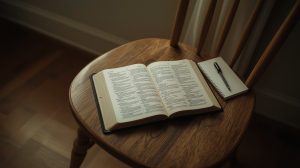
The Church Brought Forth by the Word
Text: James 1:18 Series: Living the Word: Faith in Action Date: June 7, 2026 Speaker: Ed Rangel Location: Waupaca Church of Christ Bible Version: NASB 1995 Interactive Study Guide: https://evvfaith.com/study-guides/am-06-07-the-church-brought-forth-by-the-word/ Print Study Guide: https://evvfaith.com/church-pillar/
Learning Objectives
-
Remember that the church is “the pillar and support of the truth” according to 1 Timothy 3:15.
-
Understand that God brought us forth “by the word of truth” according to James 1:18.
-
Recognize the difference between the Lord’s church and a human religious organization.
-
Apply the truth by serving faithfully, rejecting selfish ambition, strengthening the congregation, and living as a people governed by the word.
Thesis
(1) The church was brought forth by the word of truth; therefore, the church must uphold that truth, live according to that truth, and serve under that truth.
The church is not a club, not a religious business, and not a social circle with songs, sermons, and shared meals added to the calendar. The church is a people God brought forth by His word. If the church was born from the word, then the church cannot live apart from the word. If truth created the church, then truth must govern the church. If the gospel called us out of the world, then the church has no right to think, speak, worship, organize, or serve like the world.
Introduction
(2) I. James declares the spiritual origin of God’s people.
A. "In the exercise of His will He brought us forth by the word of truth" (James 1:18).
-
The verse begins with God, not man. a. The church was not born from human planning or religious strategy. b. It was not born from inherited tradition or the changing preferences of culture.
-
God worked according to His will. a. He brought forth a people through the word of truth. b. That word reveals Christ, exposes sin, and calls to repentance. c. It brings man to obedient faith.
(3) II. Paul declares the spiritual responsibility of the church.
A. He calls the church "the household of God, the pillar and support of the truth" (1 Timothy 3:15).
-
James shows that the church was brought forth by the truth.
-
Paul shows that the church must uphold the truth. a. The church born from the word cannot live as though the word were optional. b. The truth is not secondary, decorative, or negotiable.
(4) A weak beam can be ignored while the load is light.
(5) But when truth is no longer upheld, collapse has already begun.
(6) That is the burden of this sermon: The church stands strong only when it faithfully upholds, displays, and obeys the truth that gave it life.
(7) There are three matters before us:
-
The church was brought forth by the truth.
-
The church must uphold the truth.
-
The church upholds truth by living it.
I. The Church Was Brought Forth by the Word, So It Belongs to God
(8) A. God acted deliberately to bring forth His people.
-
James does not attribute the origin of God’s people to human creativity. a. “In the exercise of His will” places the initiative in God. b. “He brought us forth” identifies God as the One who gives life.
-
The church did not begin by human design. a. Men did not search for a more attractive religious model. b. A committee did not discover a better way to gather people. c. A generation did not invent a more effective form of religion.
-
God brought forth a people through the gospel. a. This truth does not remove the human response. b. It destroys the idea of a self-created, self-defined, and self-governed church.
(9) The church is the household of God. It belongs to God, not to men.
(10) Acts 20:28 says, “Shepherd the church of God which He purchased with His own blood.”
That means the church is not ours to redesign, rename, soften, commercialize, or modernize according to human desire. It was purchased by blood.
(11) God’s house must be ordered by God’s will.
(12) God’s house is not governed by human taste. Reverence must stand above preference.
B. The new birth demands an obedient response to the word.
-
James 1:21 says to “receive the word implanted, which is able to save your souls.” a. The word must be received with humility. b. It must not be resisted with pride.
-
1 Peter 1:22 speaks of souls purified “in obedience to the truth.” a. Peter is not describing a faith that only admires the truth. b. He describes a faith that submits to it.
-
John 3:5 declares the necessity of being born of water and the Spirit. a. The new birth cannot be turned into private emotion. b. It cannot be reduced to family inheritance or religion without obedience.
-
The same New Testament that says God brings forth by the word also commands a response. a. Man must hear the word of Christ and believe in the Son of God. b. He must repent of his sins, confess Christ, and be baptized for the forgiveness of sins.
(13) James 1:18 says, “In the exercise of His will He brought us forth by the word of truth.”
C. The means God used was the word of truth.
-
James points to the gospel as the means by which God produces spiritual life.
-
Romans 10:17 confirms that “faith comes from hearing, and hearing by the word of Christ.” a. Biblical faith is not born from emotional pressure. b. It is not born from family tradition or private experience disconnected from revelation.
-
1 Peter 1:23 confirms we have been born again through the living and enduring word. a. The church is born through the word preached, heard, believed, and obeyed.
(14) The church did not create the truth. The truth created the church.
D. Since God brought forth the church, the church belongs to Him.
-
The church is not self-created. a. It has no right to define itself by survey. b. It cannot reinvent itself in every generation. c. It cannot measure faithfulness by popularity.
-
A congregation can have the appearance of life and still be dead. a. Activity, programs, crowds, and buildings do not authorize themselves. b. A church that moves without the authority of Christ is dead.
-
James 1:22 commands, “prove yourselves doers of the word.” a. Many want the comfort of association with the word without the burden of obeying it. b. The church brought forth by the word must be governed by the word.
(15) To compromise the Word is to betray the church’s own origin.
II. The Church Must Uphold the Truth from Which It Was Brought Forth
(16) A. The church is the pillar and support of the truth.
-
Paul establishes this function in 1 Timothy 3:15. a. The church does not invent the truth. b. It upholds it, displays it, defends it, teaches it, and lives under it.
-
Truth does not come from the church. a. The church does not vote truth into existence. b. It has no authority to modify what God has already revealed.
-
The church cannot be ashamed of Scripture. a. It cannot hide what God revealed. b. It cannot change the message to please the age.
(17) A pillar holds something up where it can be seen.
(18) Philippians 2:15–16 says Christians are to “appear as lights in the world, holding fast the word of life.”
(19) The church must display the truth plainly before the world.
(20) The church must not hide, soften, or apologize for the truth.
B. The church must speak clearly where Scripture speaks clearly.
-
When Scripture speaks about salvation, the church must teach grace through obedient faith. a. The response includes hearing, believing, repenting, confessing, and being baptized.
-
When Scripture speaks about baptism, the church must speak without fear. a. Acts 2:38 does not present baptism as an optional symbol. b. Romans 6:3–4 connects it with the death, burial, and resurrection of Christ. c. Galatians 3:27 says those baptized into Christ have clothed themselves with Christ.
-
When Scripture speaks about worship, the church must stand on authority. a. Worship is not authorized by human taste or governed by entertainment. b. It is not justified by sincerity if God has not authorized it.
-
The church does not serve souls by keeping silent. a. It must speak clearly on holiness, marriage, sin, and repentance. b. It cannot soften the word to keep cultural approval.
(21) 2 Timothy 4:2 says, “Preach the word; be ready in season and out of season.”
C. The church must preach the word.
-
2 Timothy 4:2 commands readiness in season and out of season.
-
Paul did not tell Timothy to entertain people. a. He did not tell him to reflect the thinking of the culture. b. He commanded him to preach the word.
-
The preaching must reprove, rebuke, and exhort with patience and instruction. a. Reprove when sin must be confronted. b. Exhort when saints must be strengthened. c. Teach when ignorance must be corrected.
-
A church that stops preaching the word loses its spiritual reason for existing.
(22) A church that fears pressure cannot stand as a pillar.
(23) Acts 5:29 says, “We must obey God rather than men.”
(24) The support holds firm what God has revealed.
(25) Jude 3 commands Christians to “contend earnestly for the faith which was once for all handed down to the saints.”
(26) The church guards, preserves, and defends the truth.
(27) 2 Timothy 1:13–14 says to “retain the standard of sound words” and to guard the treasure entrusted to us.
(28) The church is not the source of truth. The church stands under the truth, not over it.
(29) Jesus said in John 17:17, “Sanctify them in the truth; Your word is truth.”
(30) When doctrine becomes secondary, the church abandons its assigned work.
D. The church must uphold the truth not only with words, but with life.
-
It is possible to defend the truth verbally while denying it practically. a. James says the hearer who does not obey deceives himself.
-
A congregation cannot uphold the truth publicly while members neglect it privately. a. We weaken the testimony if we teach holiness but live carelessly. b. We weaken it if we teach love but devour one another.
-
James 3:14 warns against bitter jealousy and selfish ambition. a. A church can lie against the truth without changing the words on the sign. b. Pride and worldly wisdom contradict the truth the church claims to uphold.
E. The wisdom from above must govern the service of the church.
-
James 3:15 says jealous wisdom is earthly, natural, and demonic. a. God does not call worldly attitudes spiritual just because they happen in a meeting.
-
The church cannot serve Christ while fighting for personal recognition.
-
James 3:17 defines the wisdom from above. a. It is pure, peaceable, gentle, reasonable, full of mercy, and without hypocrisy.
-
The church must uphold the truth in the pulpit and in the people.
III. The Church Must Serve as Living Proof of the Truth
(31) The church upholds the truth by living it.
A. Truth must produce action.
-
James 2:17 says faith without works is dead. a. The word does not allow a faith that professes truth but refuses to obey.
-
This principle is seen collectively in the congregation. a. A church that speaks of doctrine but does not want to work does not honor the doctrine.
-
The action God approves is rooted in the truth. a. It is not religious busyness to make us feel useful. b. It is not works invented without authority.
(32) James 1:22 says, “But prove yourselves doers of the word, and not merely hearers who delude themselves.”
(33) Truth cannot be upheld by speech alone.
(34) Titus 2:10 says believers are to “adorn the doctrine of God our Savior in every respect.”
(35) Sound doctrine must shape sound living.
(36) Corrupt teaching always produces corrupt fruit.
B. Every member matters in the body.
-
1 Corinthians 12:18 says God placed every member in the body as He desired. a. Every member has responsibility and must strengthen the body.
-
The body must function as God designed it. a. Members must teach, exhort, serve quietly, and restore the weak. b. Members must do the invisible work no one applauds.
-
The church is not a place where a few perform for the rest.
C. The body grows by what every part supplies.
-
Ephesians 4:16 says the body grows by the proper working of each individual part.
-
The question is not “what do I prefer?” but “what am I supplying?”
-
A congregation is weakened when members consume but do not contribute. a. It is weakened when they receive teaching but do not live it. b. It is weakened when they want a strong church while refusing personal obedience.
-
Truth does not produce spiritual spectators; it produces servants.
D. The church must hold the light high.
-
The church is like a lighthouse, but the light is not ours. a. The truth, the gospel, and the Savior belong to God.
-
The light is dimmed when the church compromises. a. It dims when sin is tolerated or doctrine is softened. b. It dims when worship becomes human invention or selfish ambition governs the body.
-
Matthew 5:14-16 commands us to let our light shine. a. Good works do not glorify our name. b. They point to the Father and show that the truth was received and obeyed.
E. The church must live as a people brought forth by the word.
-
Because the church was brought forth by truth, it must uphold it.
-
The church must serve under the word of truth.
-
It must refuse to function as though it had been born from human will.
Application
(37) For each Christian: Where are you yielding ground?
-
You strengthen the pillar when you receive the word with humility and let it correct you.
-
You weaken the pillar when you hear without obeying, deceiving yourself.
(38) For the congregation: A church that treats truth as negotiable is already weakening its own foundation.
-
The church must uphold truth in preaching, letting the word reprove and exhort.
-
The church must uphold truth in conduct, showing real love and unity without hypocrisy.
(39) For parents, grandparents, teachers, and future leaders:
-
A generation learns whether the word truly governs the home and whether worship is holy.
-
If children see a church of minimal attendance and softened truth, they will grow up without conviction.
-
Our children must see that we believe, speak, defend, and obey the truth.
Conclusion
I. The church exists because God brought us forth by the word of truth.
A. We do not belong to ourselves, define ourselves, or adjust the truth to fit the age.
B. We are the household of God, the pillar and support of the truth.
II. The question must be asked clearly.
A. Do we strengthen the pillar, or weaken it?
B. Do we serve under the word, or expect others to carry the weight?
C. Are we doers of the word, or only hearers?
III. James says that hearing without doing is self-deception.
A. The church needs Christians born from the word, humbled by the word, and moved to action.
B. We must strengthen the body by working without selfish ambition, speaking truth, and living truth.
Invitation
(40) If you have not obeyed the gospel, you are not part of the people brought forth by the word.
I. The gospel calls you today to hear, believe, repent, confess Christ, and be baptized.
A. There is no biblical salvation separated from the response the gospel demands.
II. If you are a Christian and have been hearing without doing, you must repent.
A. The word that brought you forth must govern you again.
B. The church born from the word must live active, obedient, and faithful under the truth.
Word Study
| Word | Original | Meaning | Use in the Text |
|---|---|---|---|
| Brought forth | ἀπεκύησεν | To beget, give birth, produce life. | James 1:18 shows that God gave life to His people through the word of truth. |
| Word | λόγῳ | Message, communicated word, spoken or proclaimed revelation. | Spiritual life is not born from human invention, but from the word revealed by God. |
| Truth | ἀληθείας | Divine reality, revealed truth, that which corresponds to the will of God. | The church was brought forth by truth and must live submitted to truth. |
| First fruits | ἀπαρχήν | First fruit offered to God, consecrated portion. | The people of God belong to God and must live as consecrated to Him. |
| Pillar | στῦλος | Support, pillar that upholds. | 1 Timothy 3:15 describes the responsibility of the church to uphold the truth. |
| Support | ἑδραίωμα | Foundation, support, firmness. | The church must affirm and defend the truth, not modify it or hide it. |
Scripture Interlock Table
| Testament | Reference | Original Context | Connection with James 1:18 | Doctrinal Use | Preaching Use |
|---|---|---|---|---|---|
| New Testament | 1 Timothy 3:15 | Paul instructs Timothy about proper conduct in the household of God. | The church brought forth by the word must conduct itself as the pillar and support of the truth. | The church does not invent the truth; it upholds it under the authority of God. | Presses the congregation to live, teach, and defend the truth without shame. |
| New Testament | James 1:21–22 | James calls Christians to receive the implanted word and be doers of the word. | The word that brings forth must also be received and obeyed. | Hearing without obeying is self-deception. | Confronts the member who admires the truth but does not practice it. |
| New Testament | 1 Peter 1:22–23 | Peter connects the new birth with the living and enduring word of God. | Confirms that the people of God are born through the word. | Obedience to the truth purifies the soul. | Reinforces that the church is not born from tradition, emotion, or preference. |
| New Testament | Romans 10:17 | Paul explains that faith comes by hearing the word of Christ. | The faith that forms God’s people is born from the proclaimed word. | Biblical faith depends on the revelation of God. | Rejects a religion based on feeling without submission to the word. |
| New Testament | 2 Timothy 4:2 | Paul commands Timothy to preach the word in difficult times. | The church brought forth by the word must keep preaching the word. | Faithful preaching reproves, exhorts, and teaches. | Calls the church not to trade preaching for entertainment or cultural approval. |
| New Testament | James 3:14–17 | James contrasts earthly wisdom with the wisdom from above. | The church born from the truth cannot uphold the truth with jealousy and selfish ambition. | Conduct can lie against the truth. | Presses the church to serve with purity, peace, mercy, and good fruits. |
| New Testament | 1 Corinthians 12:18 | Paul teaches that God placed the members in the body as He desired. | The people brought forth by the word must function as a body designed by God. | Every member has responsibility in the body. | Rebukes spectator Christianity and calls every member to serve. |
| New Testament | Ephesians 4:16 | Paul describes the growth of the body through the proper working of each member. | The church born from the word must grow through the faithful service of its members. | The body is built up when every part supplies. | Changes the question from “what do I prefer?” to “what am I supplying?” |
| New Testament | Matthew 5:14–16 | Jesus teaches that His disciples are the light of the world. | The church brought forth by the truth must show the truth through good works. | Faithful works glorify the Father, not man. | Calls the church to hold up the light without copying the world or apologizing for the truth. |